Shinjuku's skyscrapers and Mount Fuji, January 2009: the marathon starts among these towers, at the Tokyo Metropolitan Government Building. Photo: Morio, CC BY-SA 3.0
An independent guide, checked against the official site10 min readCourse from the official file
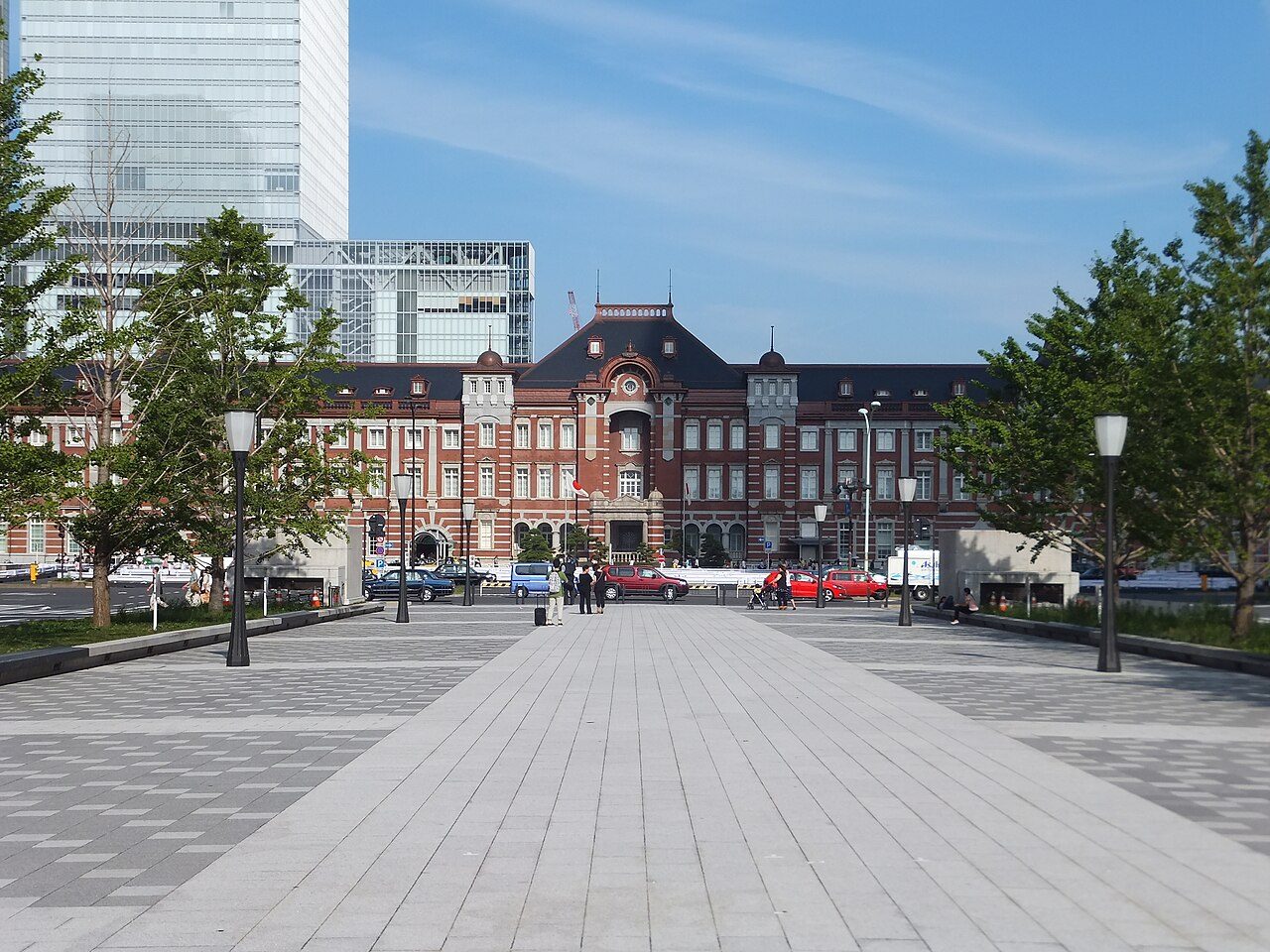
The 2026 Tokyo Marathon ran on Sunday 1 March, from the Tokyo Metropolitan Government Building in Shinjuku, through Kanda, Nihombashi, Asakusa, Ryogoku, Monzen-nakacho, Ginza and Hibiya, to a finish on Gyoko-dori Avenue in front of Tokyo Station. It was the 19th Tokyo Marathon, one of the Abbott World Marathon Majors, and 37,268 runners finished it.
Tadese Takele won the men's race in 2:03:37, his second win in a row. Brigid Kosgei won the women's race in 2:14:29, a course record.
2026 results: how it went
Men
2:03:37
Tadese Takele, the first three within a second
Women
2:14:29
Brigid Kosgei, a course record
Conditions
12.5–19°C
Sunny and dry: 9am, and the day's high
Finishers
37,268
Of 38,472 marathon starters
Geoffrey Toroitich finished in the same time as Takele, 2:03:37, and Alexander Mutiso a second behind, with Daniel Mateiko fourth in 2:03:44. Kosgei took 86 seconds off the course record Sutume Asefa Kebede set in 2024, 2:15:55, ahead of Bertukan Welde (2:16:36) and Hawi Feysa (2:17:39). Marcel Hug won the men's wheelchair marathon in 1:21:09 and Catherine Debrunner the women's in 1:37:15. The organisers counted about 1,034,000 spectators along the course.
It drops from about 40 m to under 10 m in the first 6 km and stays near sea level after that. The men's course record is 2:02:16, and in 2026 the first four men all ran under 2:04.
Difficulty
1/5 · Flat
No real hills
After the long drop out of Shinjuku, the only rises are bridges over the Sumida River and the canals, a few metres each.
Best moment
Kaminarimon, then the finish
The course loops past Asakusa's Kaminarimon Gate at about 18 km, and finishes on Gyoko-dori Avenue in front of Tokyo Station.
Runners chasing a PB on a fast, flat course
Anyone who wants to see Tokyo: Asakusa, Ginza and Tokyo Station on one course
First-timers who can finish within 6 h 30 min, the organisers' entry standard: the cut-off is 7 hours
02
Where to take the best photos at the Tokyo Marathon
The course passes a gate, a shrine, a river, two towers and a station. Our picks, for supporters with a camera and for runners who carry a phone: step to the side before you stop, as the organisers ask runners not to stop suddenly on the course.
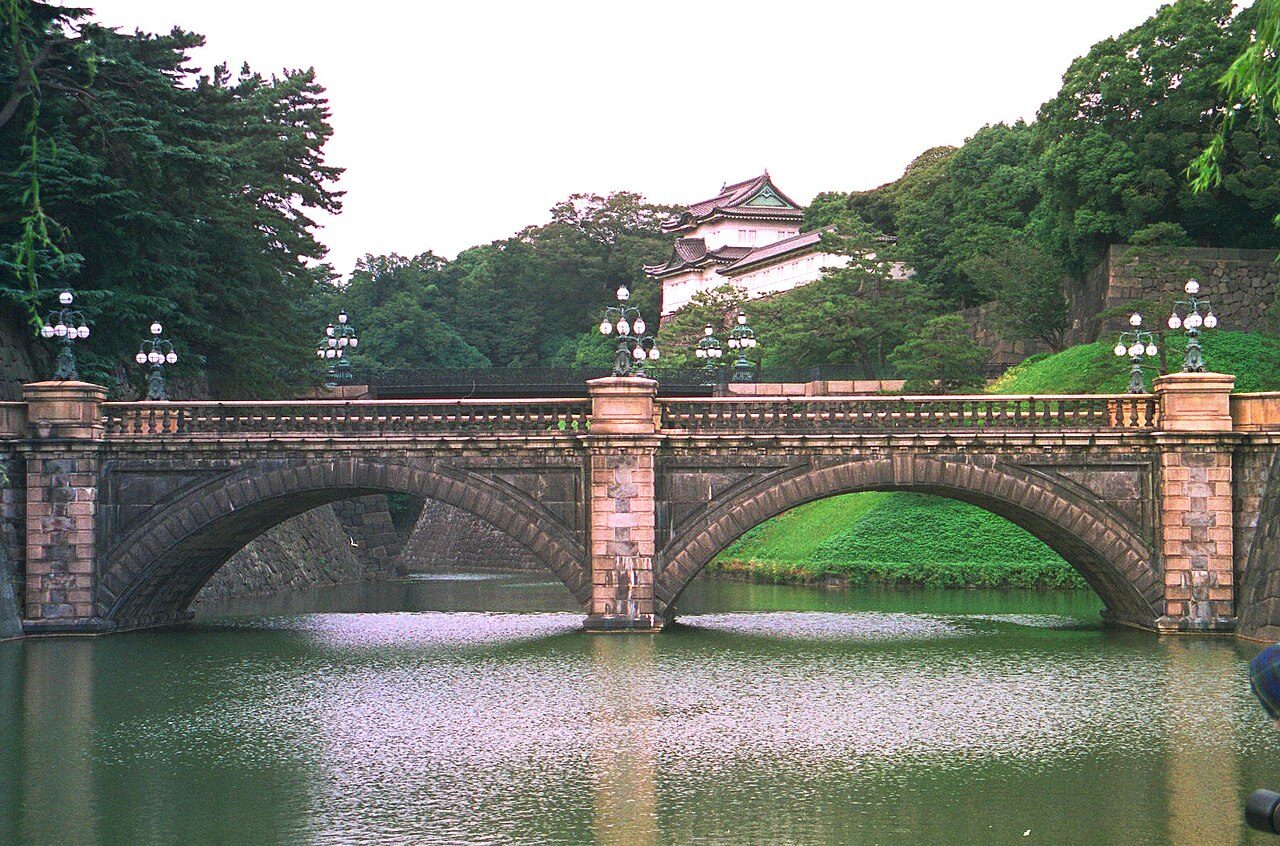
In the Kokyo Gaien National Garden, where the organisers' TOKYO CHEER gathering was held after the 2026 race, with the palace's stone bridge and moat behind you.
For runners
Hold the medal at chest height, ribbon showing.
03
Frame your memory
Ran Tokyo 2026?
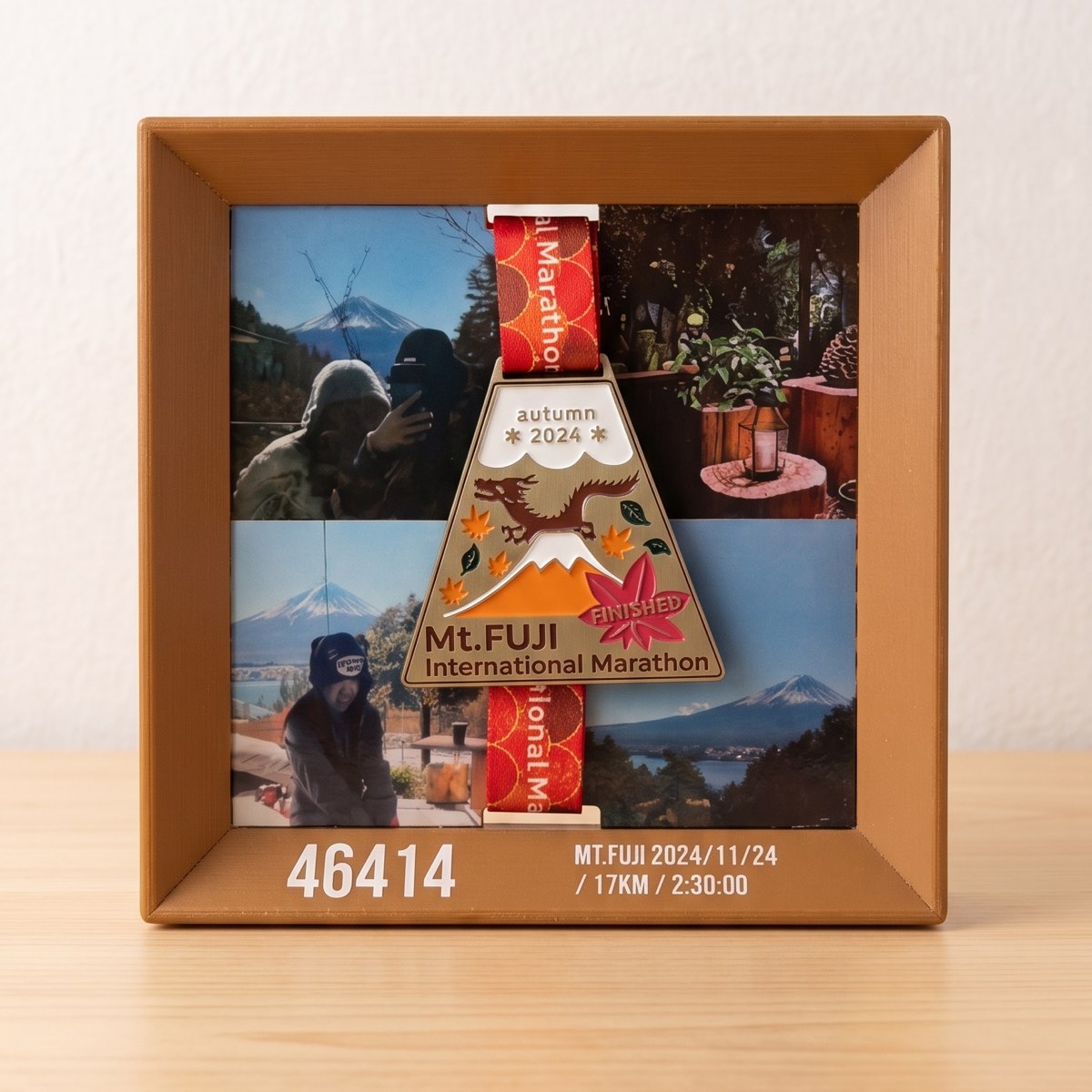
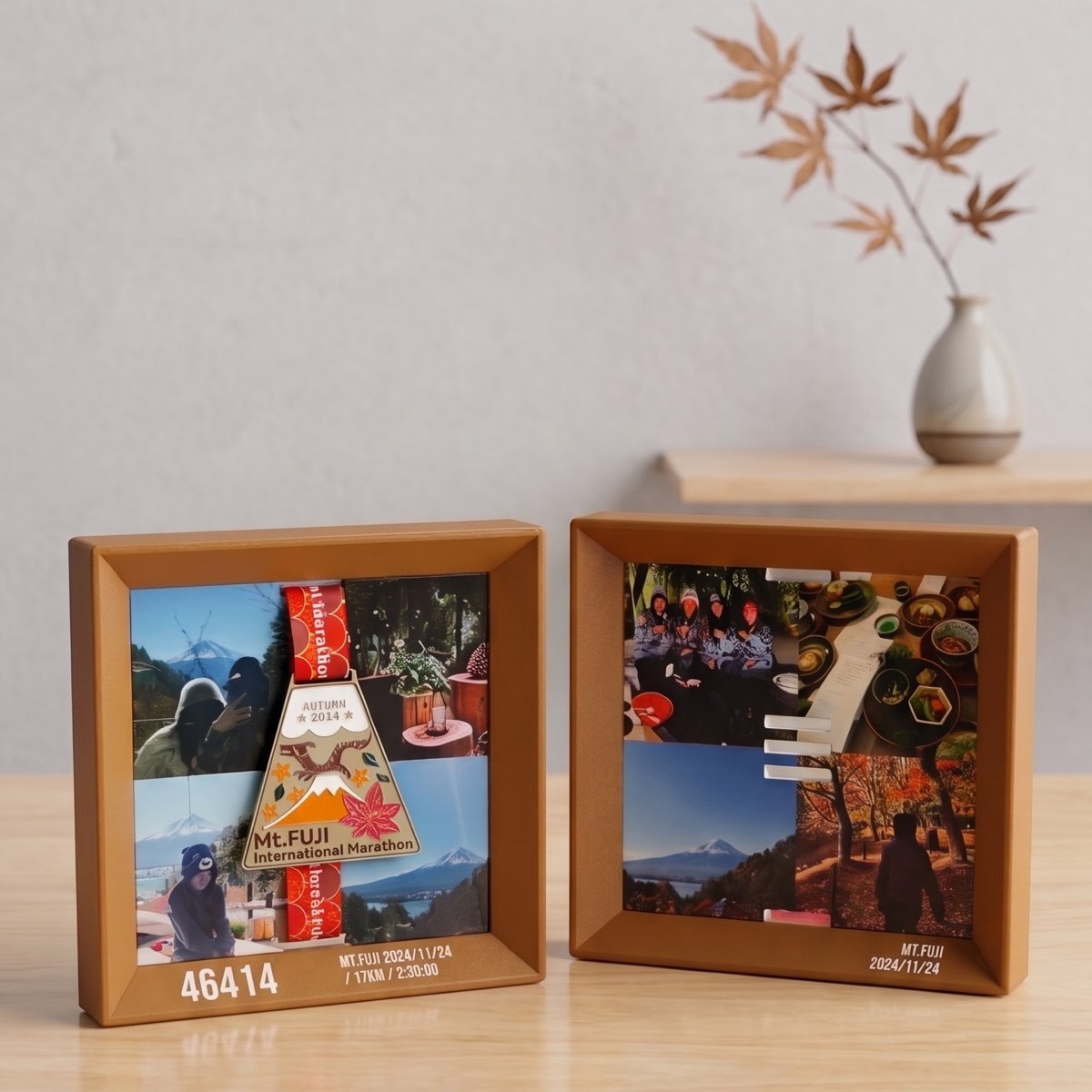
Frame your 2026 Tokyo Marathon medal
You ran Tokyo and finished in front of Tokyo Station. Now keep it: your 2026 medal, your photos from the day and your bib number, in one frame made to fit them.
Made to fit your medal and its ribbon, 2, 3 or 4 cm wide
A favourite race-day photo behind the medal
Your finishing time or a message of your own on the front
Designed on a live preview, 3D-printed to order in white, cream or black
From $35
Text On Frame $45 · Custom Pictures $45 · Text and Pictures $60
42.195 km from the Tokyo Metropolitan Government Building in Shinjuku to Gyoko-dori Avenue in front of Tokyo Station. East along Yasukuni-dori through Iidabashi and Suidobashi, north to a turn at Ueno-hirokoji, south through Kanda to Nihombashi, north again to Asakusa's Kaminarimon Gate, over the Sumida River at Kuramae Bridge and south through Ryogoku to a turn at Tomioka Hachimangu Shrine in Monzen-nakacho. Then back over the river, through Nihombashi to Ginza, down Hibiya-dori to a turn at Tamachi, and back north to the finish.
Pick a stretch, or click the course on the map, to see it close up.
0 km51015202530354042.2
km 0–6.3
Down from Shinjuku
From the start beside the Tokyo Metropolitan Government Building, the course runs east along Yasukuni-dori and drops from about 40 m to under 10 m above sea level by Iidabashi at about 6.3 km. The first cut-off point is at the crossing of Ichigaya-Mitsuke, 4.9 km.
Start, Tokyo Metropolitan Government BuildingDownhill to 6 km
The drop makes the first 5 km feel easy: run them by your watch, not your legs.
km 6.3–10.6
Suidobashi to Ueno-hirokoji
Past Suidobashi, south to Jimbocho at about 8 km and east to the crossing of Sudacho at 9.2 km, then north on Chuo-dori through Akihabara to the first turn, at Ueno-hirokoji, at 10.6 km.
Turn, Ueno-hirokoji, 10.6 kmAid stations at 7 and 10 km
km 10.6–15.4
Kanda and Nihombashi
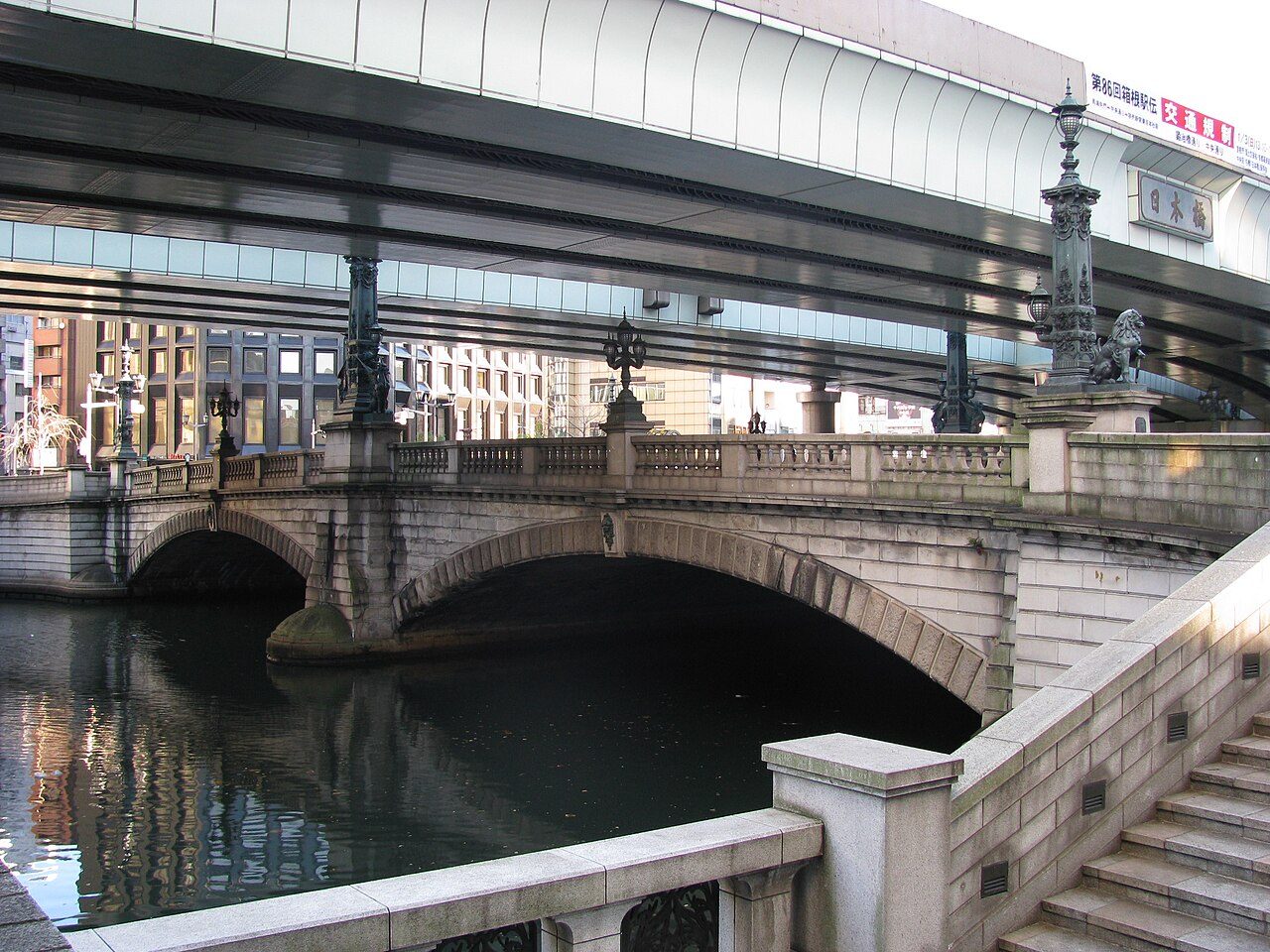
Back south on Chuo-dori through Akihabara and Kanda, over the bridge at Nihombashi at about 13.3 km, then east through Kayabacho to the crossing of Hisamatsucho at 15.4 km.
Nihombashi, about km 13.3
km 15.4–20.9
Asakusa and Kuramae Bridge
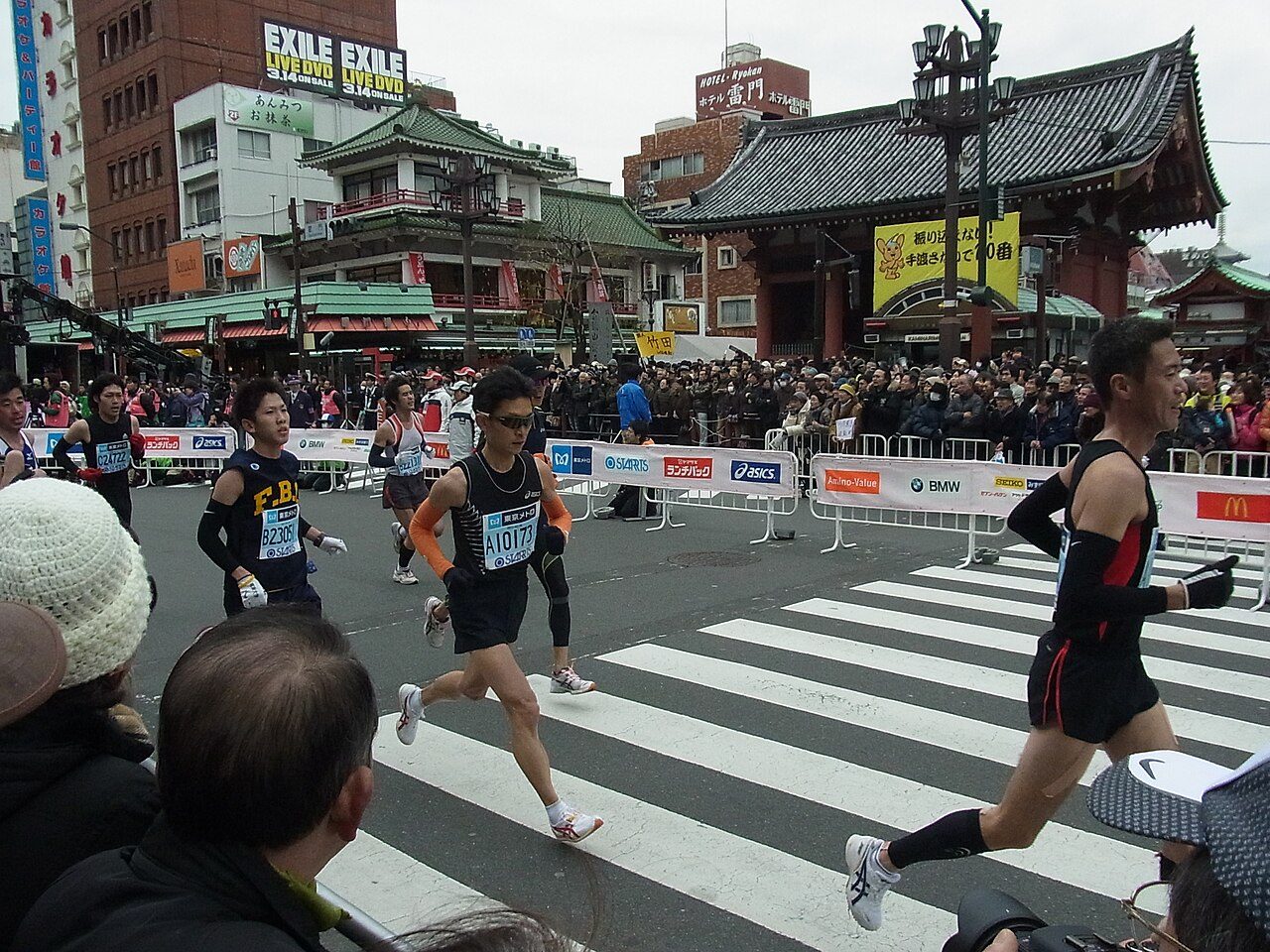
North through Asakusabashi and Kuramae 1-chome to Asakusa, round past the Kaminarimon Gate at about 18.2 km and back to Komagata, then east over the Sumida River on Kuramae Bridge at 20 km to the crossing of Midori 1-chome, 20.9 km.
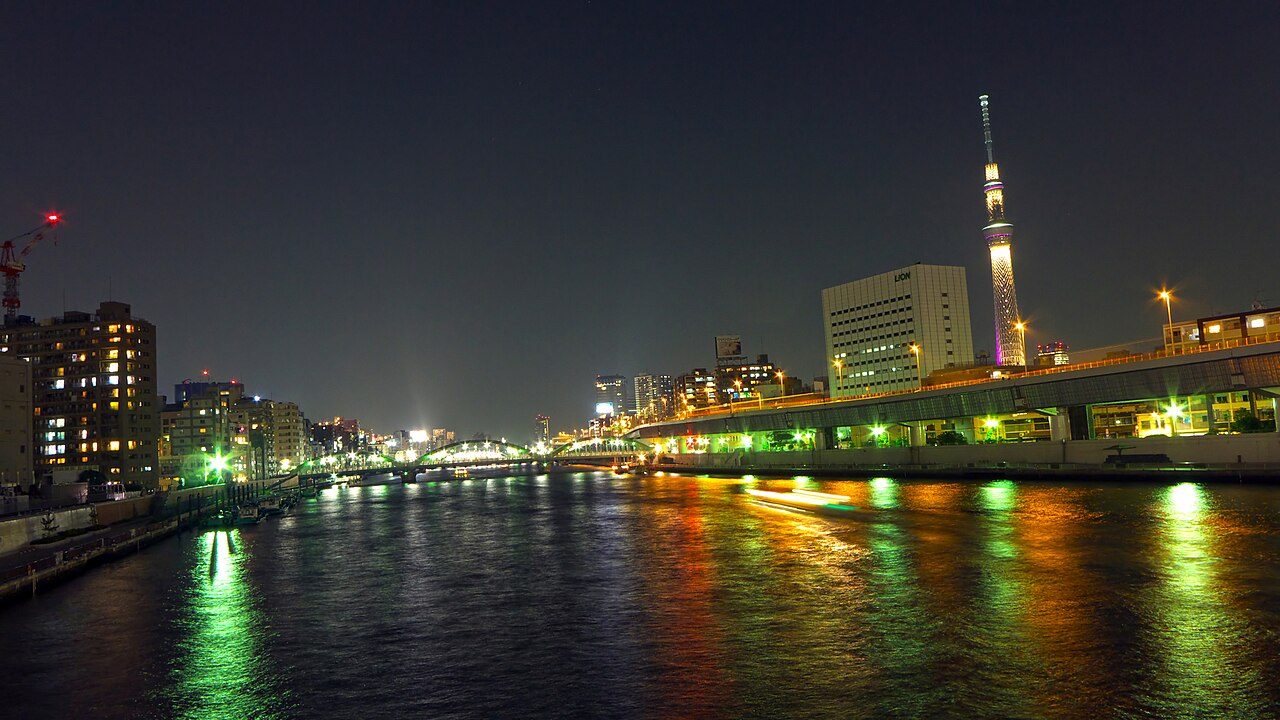
Kaminarimon Gate, about km 18.2Kuramae Bridge, 20 km
Look up the river from Kuramae Bridge: the Tokyo Skytree is upstream.
km 20.9–27
Ryogoku to Monzen-nakacho and back
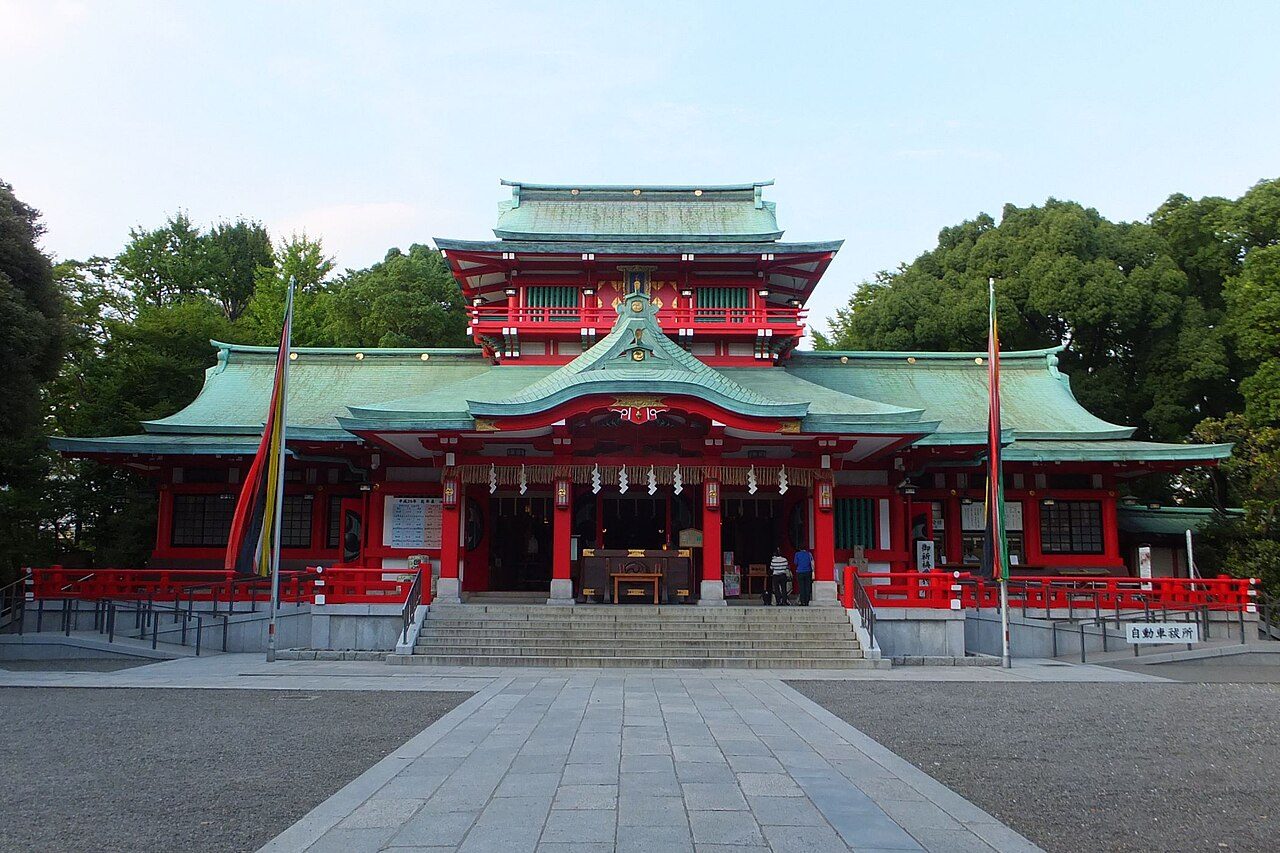
Through halfway at 21.1 km and south down Kiyosumi-dori to the turn at Tomioka Hachimangu Shrine in Monzen-nakacho, 23.95 km, then back north on the same road to Midori 1-chome at 27 km.
Halfway, 21.1 kmTurn, Tomioka Hachimangu, 23.95 kmRunners both ways
km 27–33.5
Back over the river to Ginza
Hardest
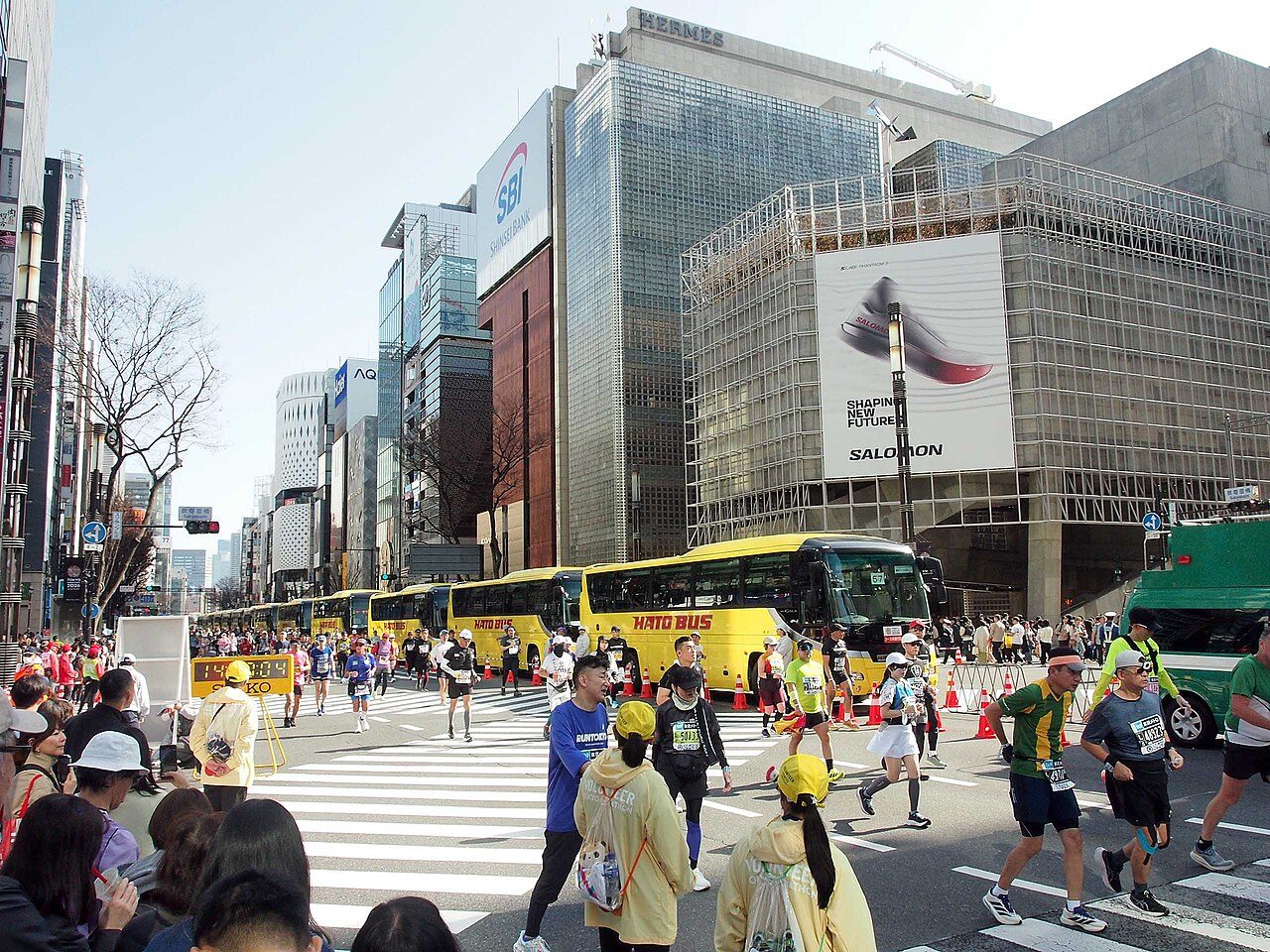
West over Kuramae Bridge again at 28 km, south through Asakusabashi (29.2 km) and Kayabacho, through Nihombashi at about 32 km and down Chuo-dori to Ginza 4-chome at about 33.4 km, and the crossing of Sukiyabashi at 33.5 km. Flat, but it's where the distance starts to tell.
Kuramae Bridge again, 28 kmGinza, about km 33.4
Take on fuel before Ginza: there are aid stations at 30 and 32 km.
km 33.5–37.5
Hibiya-dori to Tamachi
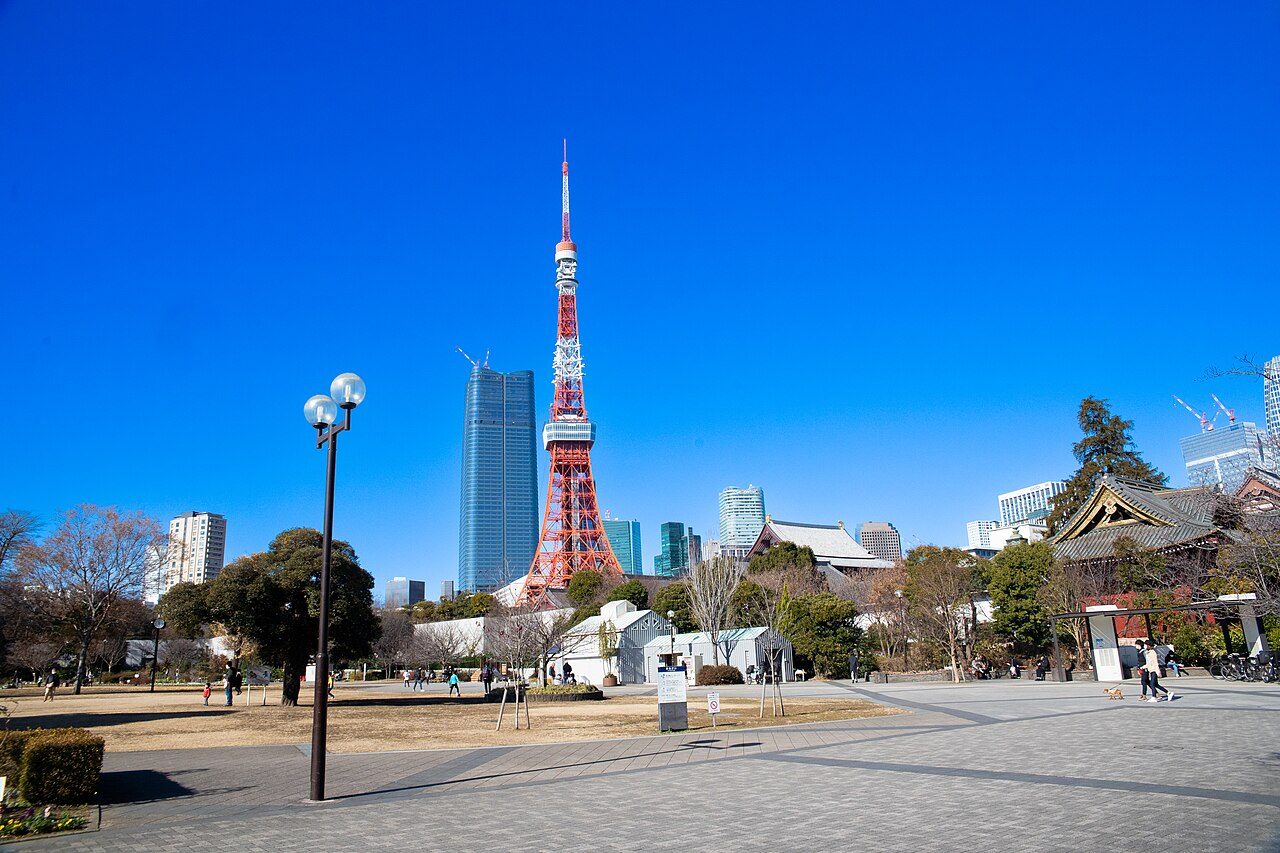
Past Hibiya and south down Hibiya-dori, beside Shiba Park and Tokyo Tower at about 36.3 km, to the last turn, at Tamachi, at 37.5 km.
Tokyo Tower, about km 36.3Turn, Tamachi, 37.5 km
You'll see the faster runners coming back: it's a long, straight road, so set yourself a target ahead.
km 37.5–42.2
Hibiya-dori home to Gyoko-dori
Back north up Hibiya-dori past Shiba Park (38.5 km is the last cut-off point), to Hibiya at about 41 km, north through Marunouchi and left onto Gyoko-dori Avenue for the finish, with Tokyo Station behind you.
Hibiya, about km 41Finish, Gyoko-dori Avenue
Keep running through the line: the moment you'll frame is the last 100 m.
Drawn from the organisers' official 2026 course map: each stretch's km is measured on it, and the cut-off points' km are the organisers' own.
05
How hilly is the Tokyo Marathon?
Hardly at all, and mostly downhill. The course starts at about 40 m above sea level beside the Tokyo Metropolitan Government Building and drops to under 10 m by 6 km, as the organisers' elevation profile shows. From there to the finish it is flat and close to sea level, with short rises over the bridges.
The chart below uses the heights in the organisers' official course map. The two biggest bumps after Shinjuku are Kuramae Bridge over the Sumida River, at 20 and 28 km: a few metres each.
About 40 mStart heightOfficial course map
Under 10 mFrom 6 km onOfficial elevation profile
2:02:16Men's recordBenson Kipruto, 2024
2:14:29Women's recordBrigid Kosgei, 2026
0 m40 m80 mShinjukua short riseKuramae Br.over the SumidaBack overKuramae Bridge again
0 km51015202530354042.2
Heights from the organisers' official course map, which match their published elevation profile: treat the small bumps as bridges.
Hover or drag along the chart to read the heights.
Where it bites
km 0–6
Down from Shinjuku
The course loses about 30 m along Yasukuni-dori before Iidabashi.
It's easy to go out too fast here: hold back for the flat 36 km to come.
km 10.6
The first of the turns
The course turns back at Ueno-hirokoji, at Tomioka Hachimangu (23.95 km) and at Tamachi (37.5 km), and loops past Kaminarimon at about 18 km.
Take each turn wide if it's crowded, and expect the field to bunch.
km 19.6–20
Kuramae Bridge
The first crossing of the Sumida River: a rise of a few metres, up and over.
Shorten your stride up it and let it roll you down.
km 20.9–27
Kiyosumi-dori, out and back
Down to Monzen-nakacho and back on the same road, through halfway: you'll see the runners ahead of you and behind.
Settle into your pace here, before the long road south.
km 30–37.5
The long road south
From Nihombashi through Ginza and down Hibiya-dori to the turn at Tamachi: flat, straight and late.
Use the aid stations at 32 and 35 km, and pick runners ahead to reel in.
km 41–42.2
Into Gyoko-dori
From Hibiya the course comes north through Marunouchi and turns onto Gyoko-dori Avenue for the finish.
Lift your head for the last metres: Tokyo Station is behind you for the photos.
06
Race week and race morning
In 2026 the race day had two races: the marathon (with the wheelchair marathon) and the 10.7 km race for its own categories, both from Shinjuku. Times marked Official are the organisers' 2026 times; the rest is our suggestion.
OfficialFrom the organisers' siteSuggestedOur adviceReportedFrom runners' reports
Race week
Race morning: start times and a suggested schedule
Start
Shinjuku, 9:10am
Finish
Gyoko-dori Avenue
Cut-off
7 hours from the gun
Pacers
2:50 to 5:30
One start for every corral, at 9:10am, and your official time runs from the gun. Pacers from 2:50 to 3:30 run to gun time; from 3:40 to 5:30, to net time.
The start area opens
Official
Through your entrance gate, where your wristband is checked and your bags are searched. Plastic bottles aren't allowed in.
Toilets, then your bag and corral
Suggested
The organisers warn that the start's portable toilets get crowded: go early. There are changing tents inside the gates.
The entrance gates close
Official
Runners must be inside the start area by now.
Line up in your corral
Official
Pacers wear a flag and start at the front of their block.
The wheelchair marathon starts
Official
Five minutes ahead of the runners, on the same course.
The marathon starts
Official
Your official time runs from the gun.
4:10pm
The finish closes
Official
7 hours from the gun. There are cut-off points along the course: 4.9 km at 10:25am, 9.2 km at 11:10am, 15.4 km at 11:55am, 20.9 km at 12:45pm, 24.7 km at 1:20pm, 29.2 km at 2pm, 33.5 km at 2:35pm and 38.5 km at 3:15pm.
After
Meet your people at the Meet Area
Official
Not at the finish line, which is closed to spectators. It takes about 30 minutes from the line to the changing area, and the route out depends on the colour of your bib.
Start
Shinjuku, 9:10am
Finish
Nihombashi
Cut-off
2 hours
For its own categories only: junior and youth runners aged 16 to 18, visually impaired, intellectually challenged and transplant runners, and wheelchair racers. It isn't open to general entrants.
The wheelchair 10.7 km starts
Official
With the wheelchair marathon.
The 10.7 km starts
Official
With the marathon, on the same course as far as Nihombashi.
The 10.7 km finish closes
Official
At Nihombashi, beside CongresSquare Nihonbashi, which had changing rooms and a meeting space for runners' companions.
07
Where to watch the Tokyo Marathon
The best places to watch are where the course turns or passes twice: the loop at Kaminarimon and the turn at Tomioka Hachimangu let you see runners both ways, and Kuramae Bridge and Shiba Park each see them twice. Cross the course only by underpasses or footbridges, as the organisers ask, keep off barriers, ladders and stools, and use public transport: roads are closed all day. The finish area is closed to spectators, so plan to meet outside it.
From Ginza 4-chome along Harumi-dori to the crossing of Sukiyabashi, the 33.5 km cut-off point. The organisers warn that tourist spots like this get crowded: arrive early.
In 2026 the organisers' TOKYO CHEER gathering area for runners, family and friends after the race, from 10am to 4pm, a short walk from the finish.
Hibiya or Nijubashimae station
08
Race-morning weather
Race day was sunny, dry and warm for early March: 12.5°C at 9am in central Tokyo, a high of 19.0°C, and the humidity down to about 20% by the afternoon (Japan Meteorological Agency, Tokyo). The organisers had warned of a high around 17°C and asked runners to drink at every aid station. For the next race's forecast, see the official site in race week.
12.5°CAt 9am19°CThe day's high
0°C10°C20°C30°C
Sunrise 6:11am, three hours before the start
Recent race mornings
20261 Mar
Sunny and dry, with the humidity down to about 20% by the afternoon
9am 12.5°CHigh 19.0°C
20252 Mar
Sunny and dry in the day, and warm for early March
9am 12.7°CHigh 22.1°C
20243 Mar
Clear and cold: a low of 1.2°C that morning
9am 6.8°CHigh 13.4°C
09
How to get into the Tokyo Marathon
Most places come through the general entry, drawn at random when entries exceed the field. The rest go to charity runners, Semi-Elite runners who meet the time standards, runners on official tours, and the organisers' and partners' own draws. Entry for the 2027 race has closed.
General entry
The main way in: if entries exceed the field, places are drawn at random. Apply through the English entry site if you live outside Japan.
A charity place
Apply to run for one of the projects in the Tokyo Marathon Foundation's RUN with HEART charity programme: each charity selects its runners, who then donate.
Semi-Elite (RUN as ONE)
For runners living outside Japan with a marathon under 2:22 for men or 2:50 for women, gun time, at a World Athletics Label road race. If too many apply, the fastest are taken; the rest go into the general entry.
An official tour
KINTETSU INTERNATIONAL, the official travel agency, runs official tours with guaranteed entry through International Travel Partners in each region, first come, first served.
Virtual-run and partner draws
The organisers' RUN as ONE – GLOBAL Virtual Run Series, virtual half marathons through the year, and some official partners' campaigns draw entries of their own.
19 or over on race day
Able to finish within 6 h 30 min
Most places by random draw
Prices, dates and how to apply are on the official site: marathon.tokyo/en/
10
Questions runners ask about the Tokyo Marathon
Who won the 2026 Tokyo Marathon?
Tadese Takele won the men's race in 2:03:37, his second win in a row, with Geoffrey Toroitich given the same time and Alexander Mutiso a second behind. Brigid Kosgei won the women's race in a course record, 2:14:29, ahead of Bertukan Welde (2:16:36) and Hawi Feysa (2:17:39). Marcel Hug (1:21:09) and Catherine Debrunner (1:37:15) won the wheelchair races.
Where can I find my 2026 result?
On the official results page, marathon.tokyo/2026/result, where you can search by bib number or name.
What was the weather like at the 2026 Tokyo Marathon?
Sunny, dry and warm for early March: 12.5°C at 9am and a high of 19.0°C in central Tokyo, with low humidity (Japan Meteorological Agency). Sunrise was at 6:11am, three hours before the 9:10am start.
How many people ran the 2026 Tokyo Marathon?
38,472 started the marathon, including the wheelchair marathon, and 37,268 finished it: 96.9%. With the 10.7 km race, 37,567 people finished on the day.
What did 2026 finishers get?
In the finish area, a finisher's medal, drinks and a finisher's robe. Before the race, every runner was given a Tokyo Marathon soft cup and, in the bib packet, a Tokyo Metro 24-hour ticket.
Were there pacers in 2026?
Yes, wearing flags: 2:50, 3:00, 3:10, 3:20, 3:30, 3:40, 3:50, 4:00, 4:15, 4:30, 4:45, 5:00 and 5:30, plus race-walk pacers at 3:07 and 3:20. Up to 3:30 they ran to gun time, from 3:40 to net time, each starting at the front of its block.
Where were the aid stations in 2026?
Fifteen, at 5, 7, 10, 12, 15, 17, 20, 22, 25, 27, 30, 32, 35, 38 and 40 km, with water and sports drinks in paper cups, and food at some of them. The organisers asked runners to take water from the back of each station, where it's less crowded.
When is the next Tokyo Marathon?
On Sunday 7 March 2027: the 20th Tokyo Marathon, with a field of 40,000.
Where does the Tokyo Marathon start and finish?
It starts beside the Tokyo Metropolitan Government Building in Shinjuku and finishes on Gyoko-dori Avenue in front of Tokyo Station.
Is the Tokyo Marathon hilly?
No. It drops from about 40 m above sea level at the start to under 10 m by 6 km, and is flat from there to the finish, apart from short rises over bridges such as Kuramae Bridge at 20 and 28 km.
Is Tokyo a PB course?
Yes, for most runners: downhill early, then flat, and certified by the JAAF, AIMS and World Athletics. The men's course record is 2:02:16 (Benson Kipruto, 2024) and the women's 2:14:29 (Brigid Kosgei, 2026).
How old do you have to be to run the Tokyo Marathon?
19 or over on race day, and able to finish within 6 hours 30 minutes.
What is the cut-off time?
7 hours from the gun: in 2026 the race started at 9:10am and the finish closed at 4:10pm. There are cut-off points along the course, the first at 4.9 km and the last at 38.5 km: a runner who misses one stops there, and can take the sweep bus to the finish area.
Can I collect my bib on race morning?
No. You collect it in person at the EXPO at Tokyo Big Sight in the three days before the race, with your bib confirmation and photo ID. There is no packet pick-up on race day.
Is there a bag drop?
Only if you asked for baggage check-in when you entered: you check your bag into the truck numbered on your bib, in the official bag, and collect it in the finish area. It can't be added later.
How do I get to the start?
By train: the nearest stations are Shinjuku and Nishi-Shinjuku. Cars and charter buses can't drop runners off at the start area.
Where can my family watch?
Anywhere along the course outside the restricted areas. Kuramae Bridge (20 and 28 km) and Shiba Park (about 36 and 39 km) each see runners twice, and at Kaminarimon and Tomioka Hachimangu you can see runners both ways. The finish area is closed to spectators.
Where should we meet after the finish?
At the organisers' Meet Area, outside the restricted finish area. Allow about 30 minutes from crossing the line to reaching the changing area. In 2026 there was also a TOKYO CHEER gathering area in the Kokyo Gaien National Garden, from 10am to 4pm.
When was the first Tokyo Marathon?
In 2007. The 2026 race was the 19th, and the 2027 race is the 20th.

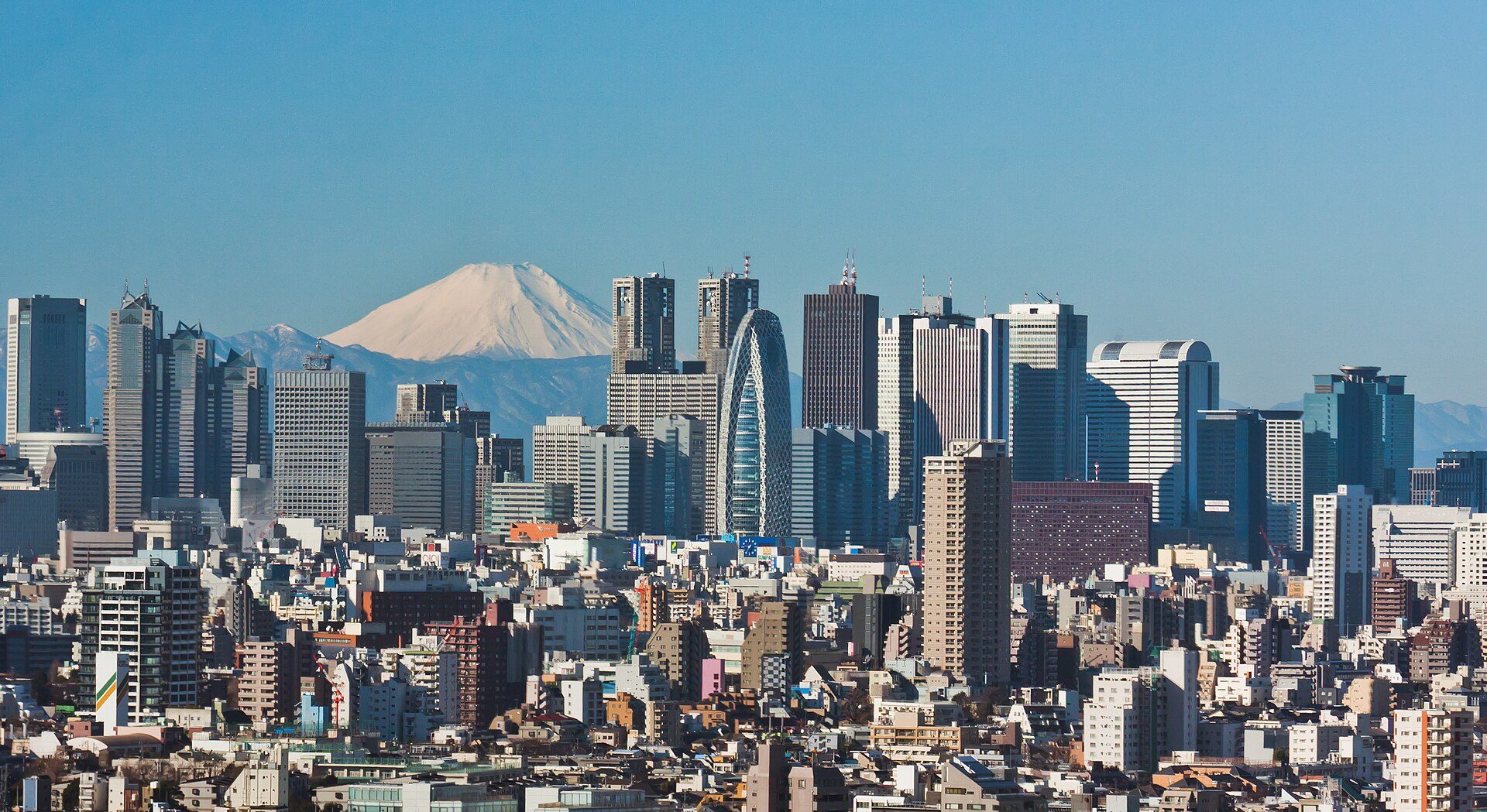
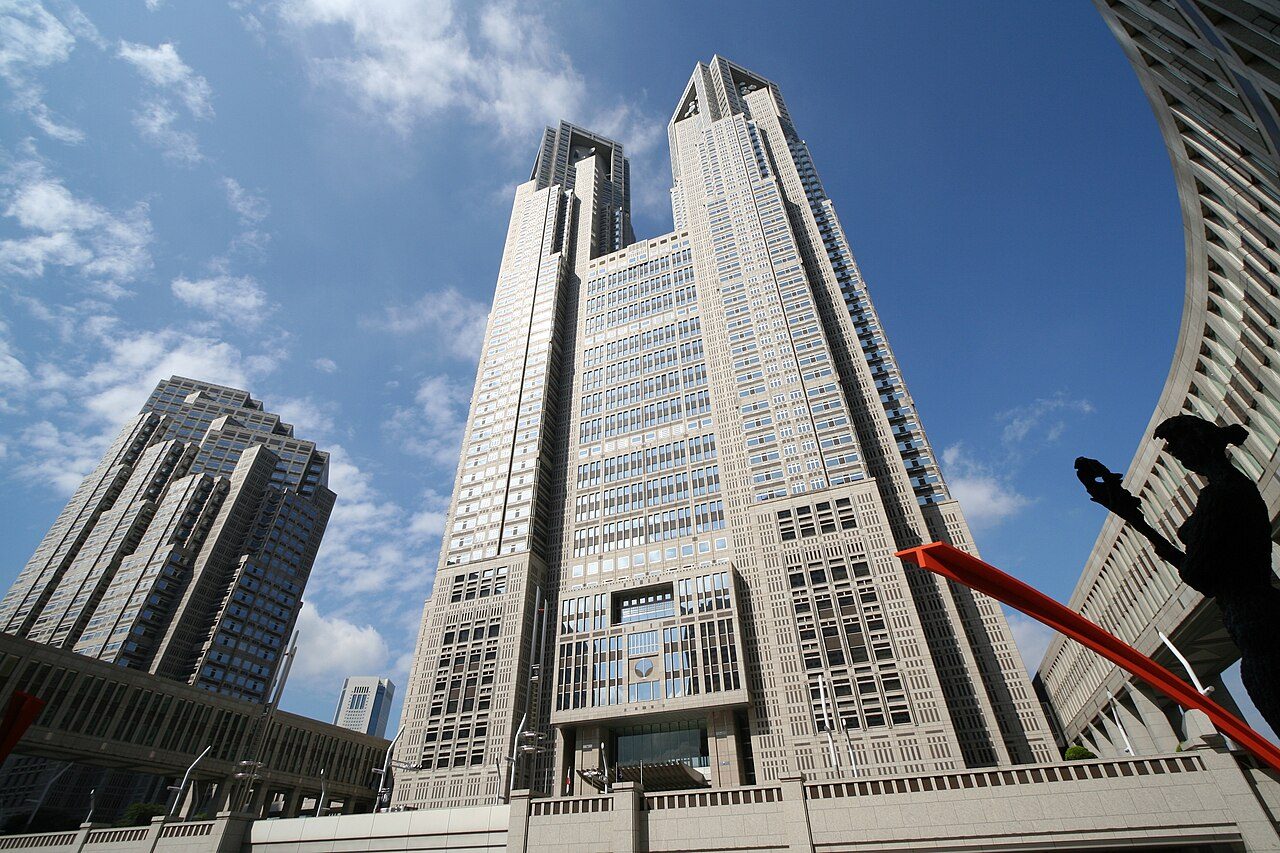 Photo: Markus Leupold-Löwenthal, CC BY-SA 3.0