Start
The start on the Champs-Élysées
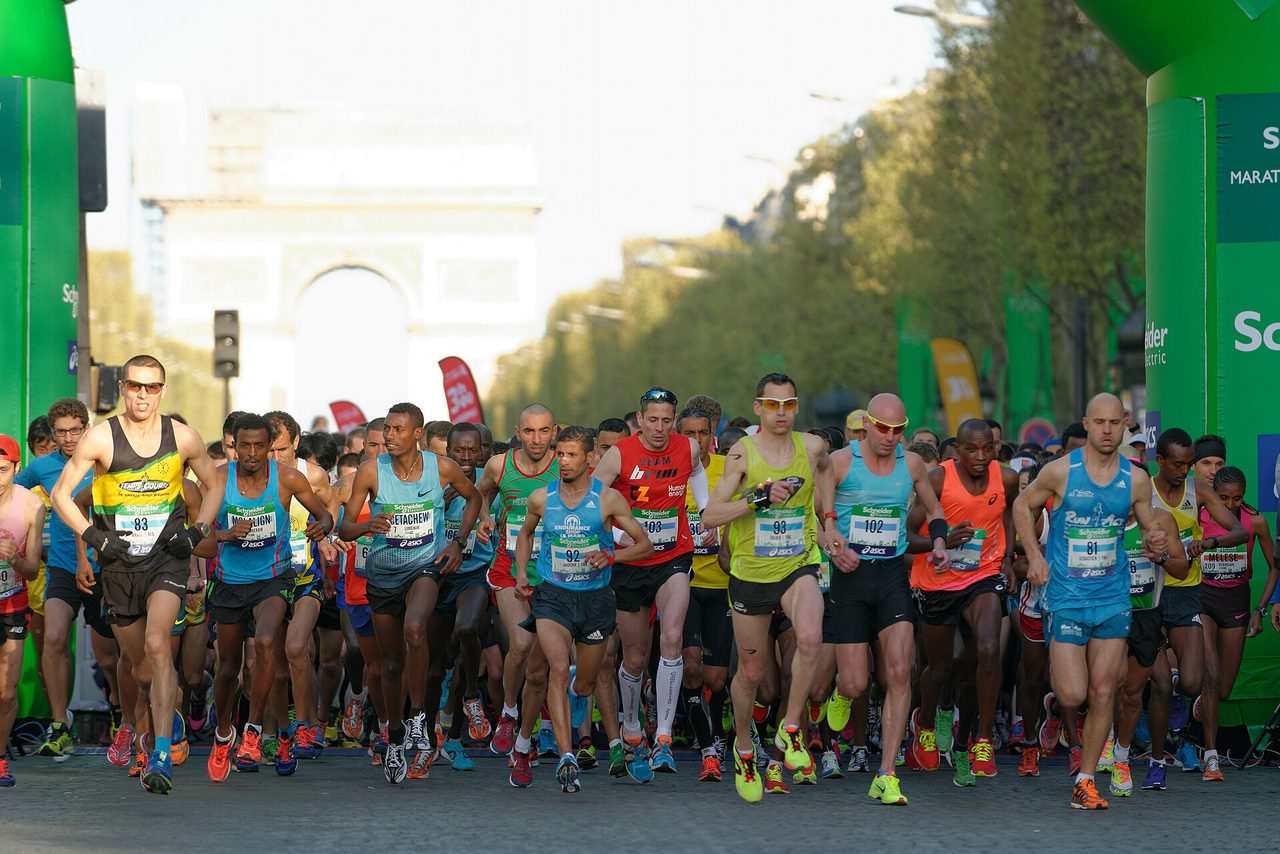
The start line is on the Champs-Élysées, with the Arc de Triomphe behind you as you set off.
For runners
In your start group, turn round: the Arc is the photo before the gun.
Race guide · Champs-Élysées to Avenue Foch
Sunday 12 April 2026 · the guide, and how it went
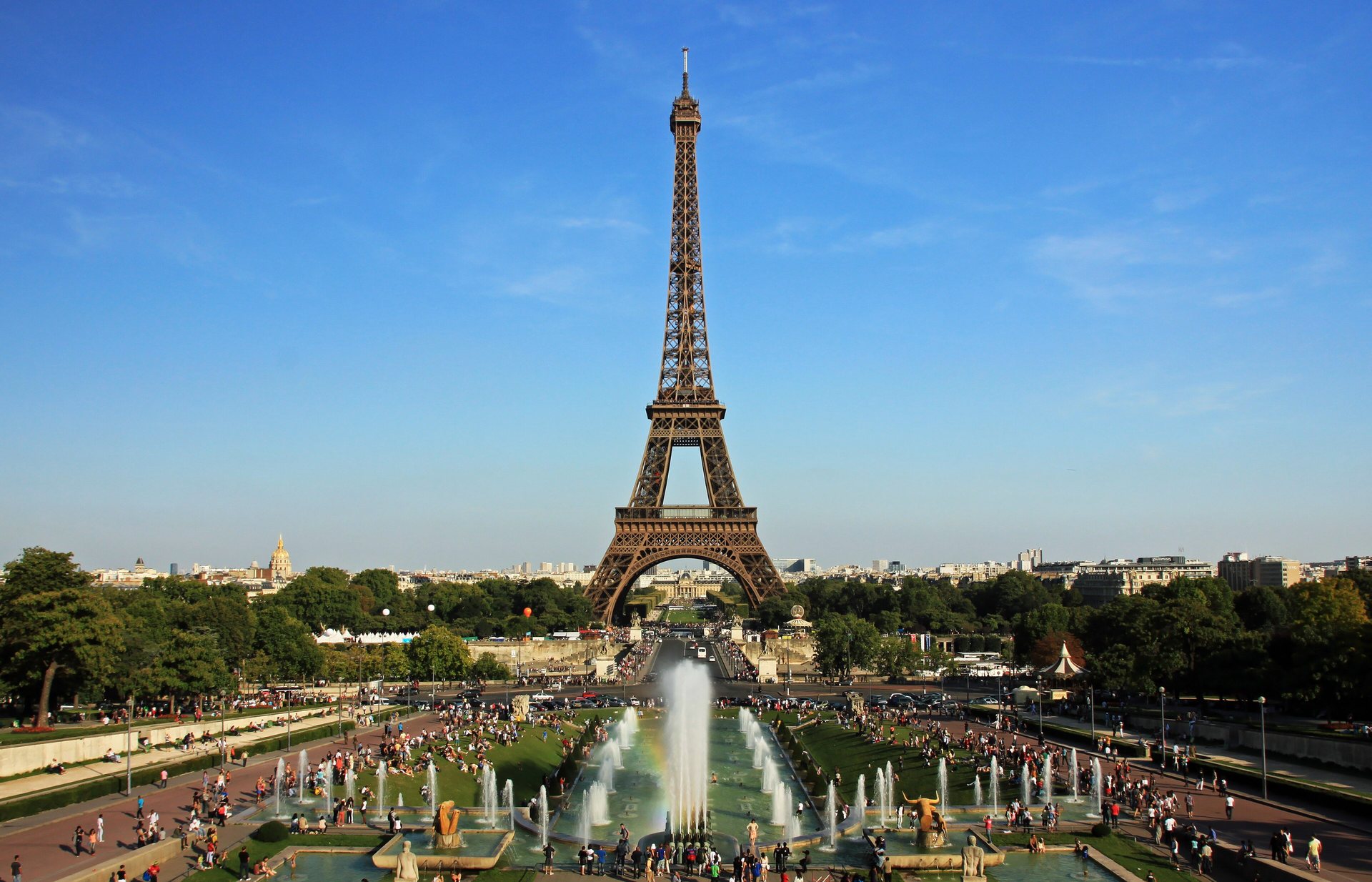
The Eiffel Tower from the Palais de Chaillot, July 2011: at about km 30 the course runs along the river below the palace, on Avenue de New York. Photo: NonOmnisMoriar, CC BY-SA 3.0
The 2026 Paris Marathon, the 49th, officially the Schneider Electric Marathon de Paris, ran on Sunday 12 April, from the Champs-Élysées through the Bois de Vincennes and along the Seine to a finish on Avenue Foch. 58,853 runners started it and 57,464 finished, by the organisers' count.
Yemaneberhan Crippa of Italy won the men's race in 2:05:18, a personal best. Shure Demise of Ethiopia won the women's race in 2:18:34, a course record.
Men
2:05:18
Yemaneberhan Crippa, a personal best
Women
2:18:34
Shure Demise, a course record
Wheelchair
1:32:19
Thibault Daurat of France
Finishers
57,464
Of 58,853 starters
Bayelign Teshager (2:05:23) and Sila Kiptoo (2:05:28) followed Crippa home: by the organisers' account, the race broke after the last refreshment station, around 39 km. Demise took 74 seconds off the course record Judith Jeptum Korir set in 2022, 2:19:48, ahead of Misgane Alemayehu (2:19:08) and Magdalyne Masai (2:19:17), and four women ran under 2:20. Elisha Rotich's men's course record, 2:04:21 from 2021, still stands. Emmanuel Roudolff-Levisse was the first Frenchman, sixth in 2:05:58, and Mekdes Woldu the first Frenchwoman, eighth in 2:26:25. The wheelchair race was also the French Para Athletics Championships.
PB potential
Quick, if you pace the rises
No steep hills, but it rolls: the organisers put the climbing at 256 m. The men's course record is Elisha Rotich's 2:04:21 from 2021, and in 2026 Shure Demise set the women's, 2:18:34.
Difficulty
Gentle rises, a late climb
Flat through the centre and along the Seine, with long gentle rises into the Bois de Vincennes and, near the end, up past the Trocadéro to Place Victor Hugo, the top of the course on the organisers' profile.
Best moment
The Seine to the Eiffel Tower
From Bastille the course drops to the river and runs along the right bank, with Notre-Dame and the Conciergerie across the water, to Avenue de New York and the Eiffel Tower at about km 30.
The course passes half the postcards in Paris. Our picks, for supporters with a camera and for runners who carry a phone: step to the side before you stop. The organisers' race photographers are out on the course too.
Pick a photo to find it on the map.
Start
The start line is on the Champs-Élysées, with the Arc de Triomphe behind you as you set off.
For runners
In your start group, turn round: the Arc is the photo before the gun.
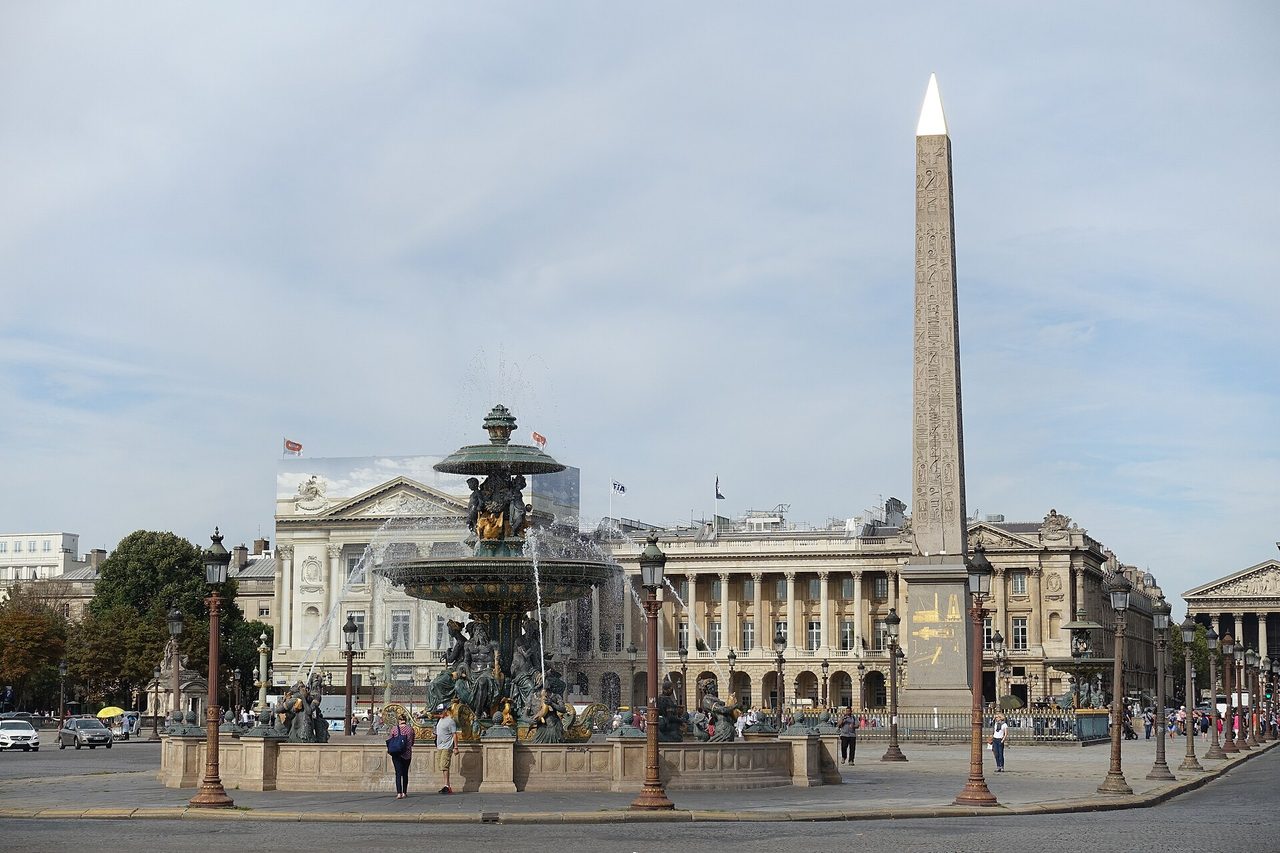 Photo: Guilhem Vellut, CC BY 2.0
About km 1
The course comes off the Champs-Élysées and round the Place de la Concorde, past the obelisk.
For supporters
Get the obelisk in the frame behind the runners.
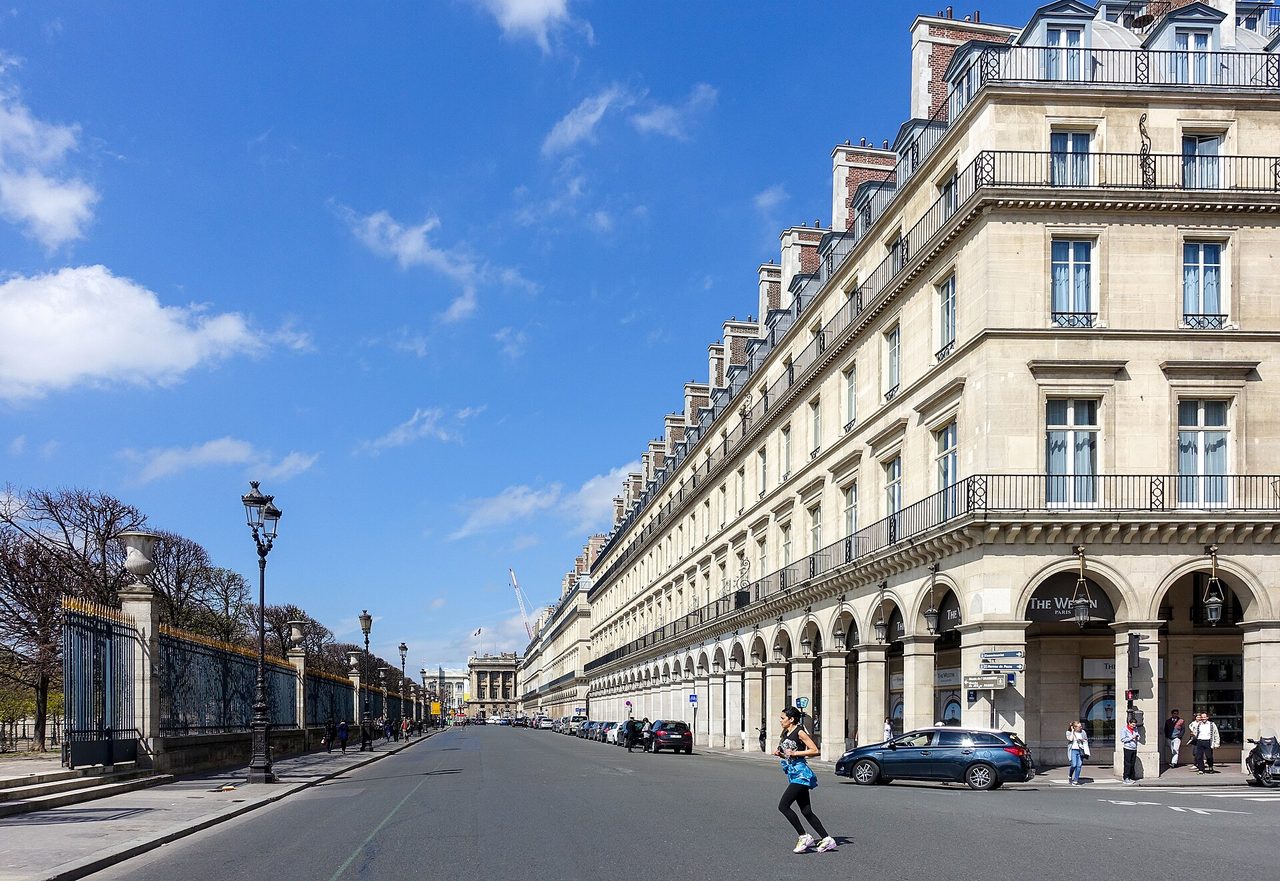 Photo: Guilhem Vellut, CC BY 2.0
About km 1.4
The arcades of Rue de Rivoli on one side and the Tuileries' railings on the other, before the turn up to the Opéra.
For supporters
Shoot along the arcades so they lead to the runner.
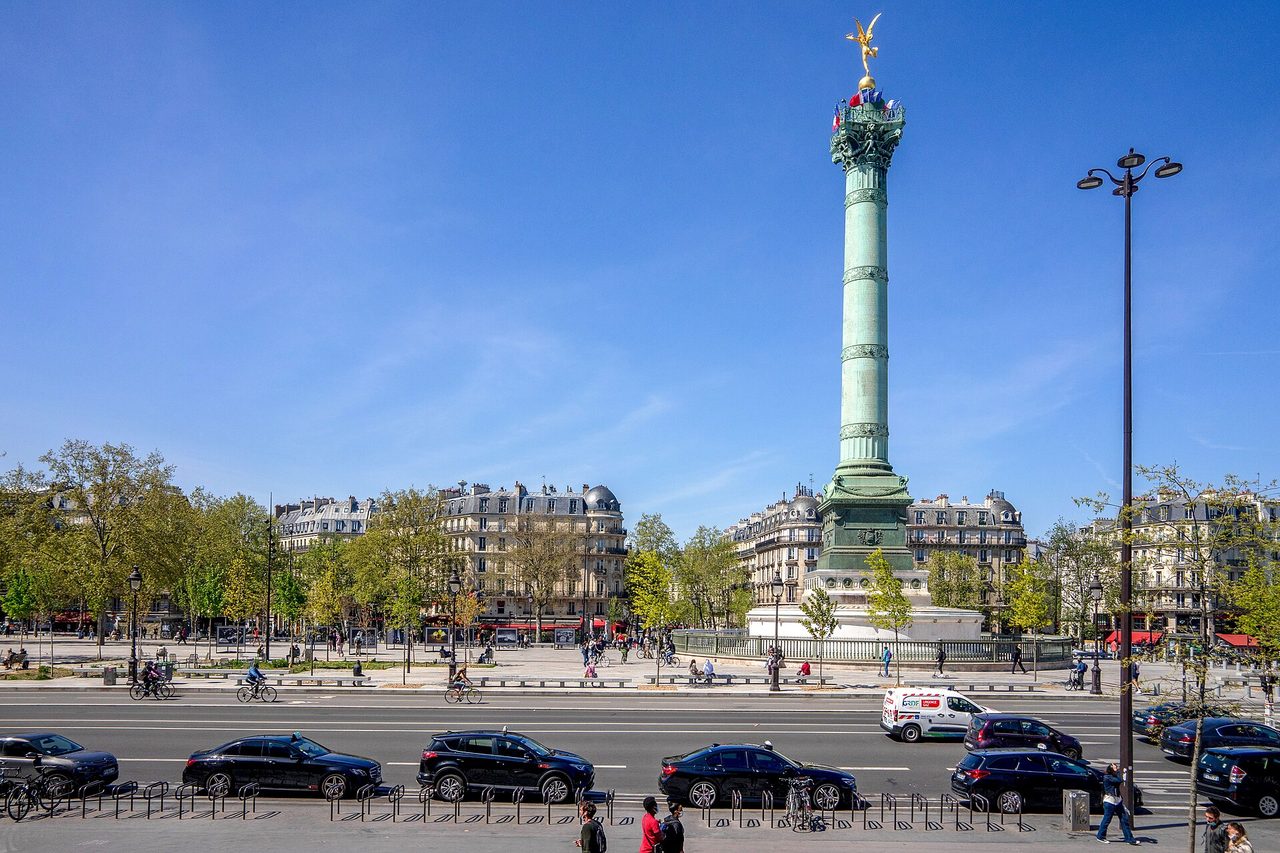 Photo: Guillaume Flament, CC BY-SA 4.0
About km 6.6
The column stands in the middle of the Place de la Bastille, and runners pass it twice.
For supporters
Stand back so the column's top is in the shot.
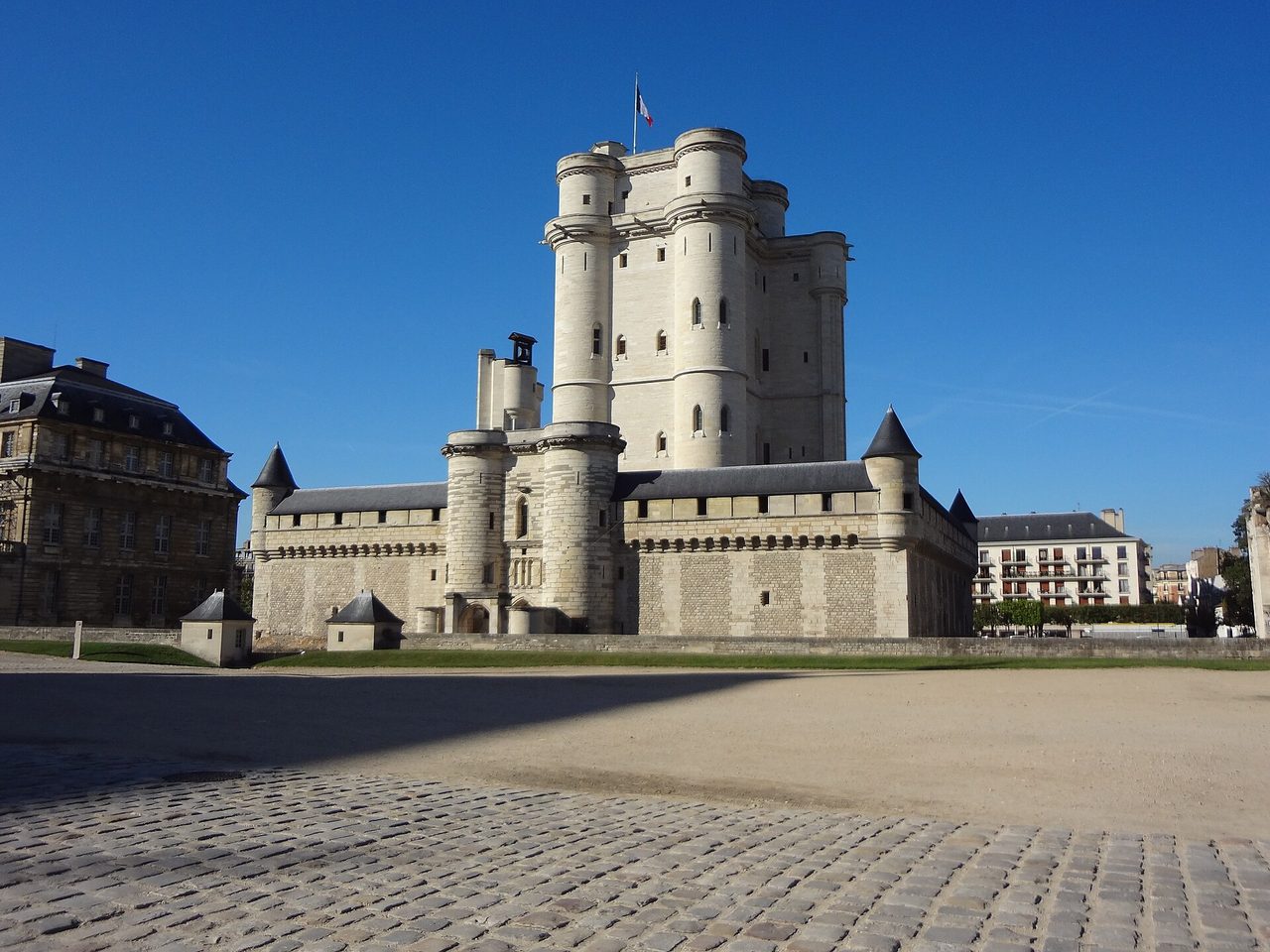 Photo: Formulavee, CC BY-SA 4.0
About km 13
The château's tall stone keep rises above its walls, and the course runs past it.
For runners and supporters
Supporters: wait where the keep rises behind the road.
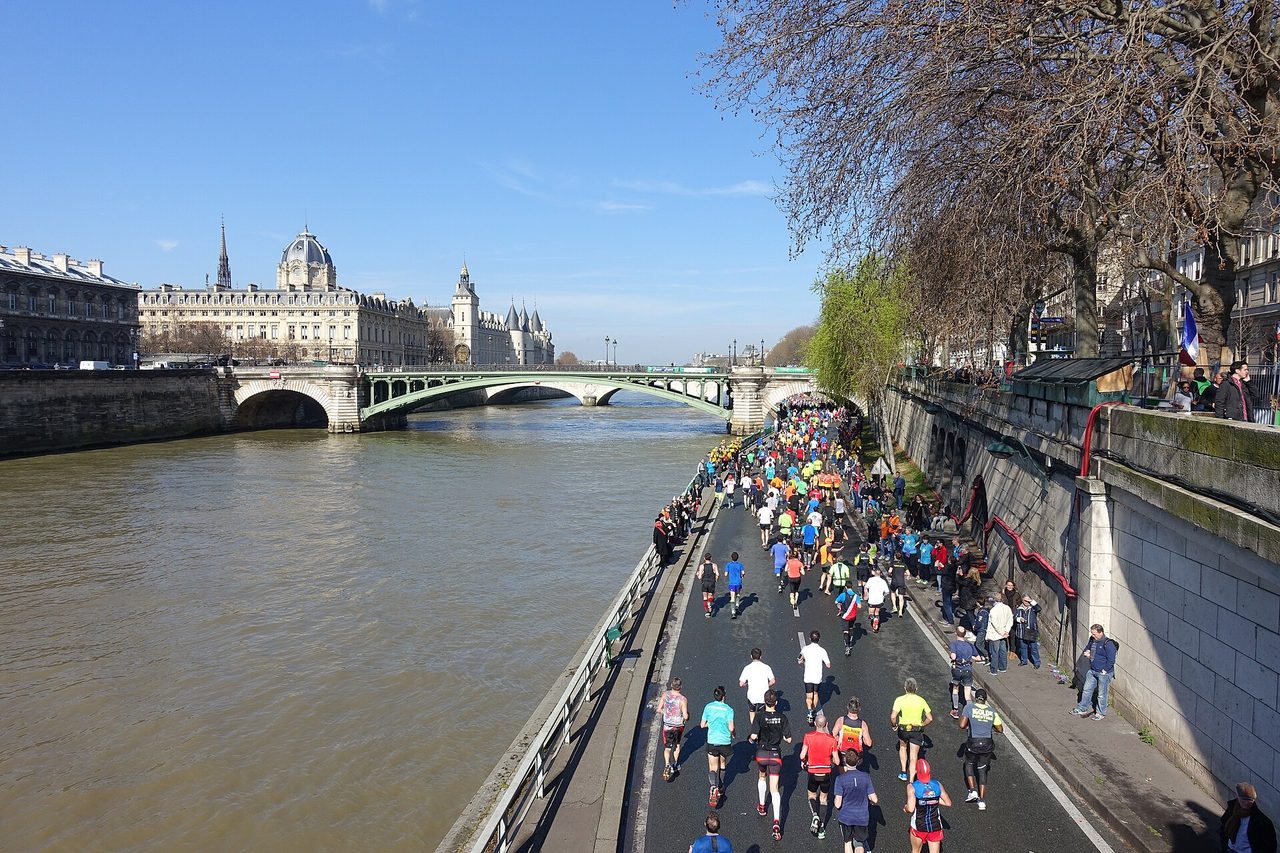 Photo: Guilhem Vellut, CC BY 2.0
Km 25 to 29
From a bridge over the right bank's quay you look down on the river of runners, with the Île de la Cité across the water.
For supporters
Shoot down the quay as the runners come towards you.
About km 30
From Avenue de New York the tower rises across the river, above the trees of the left bank.
For runners and supporters
Runners: a selfie here, with the tower over your shoulder, is the one to frame.
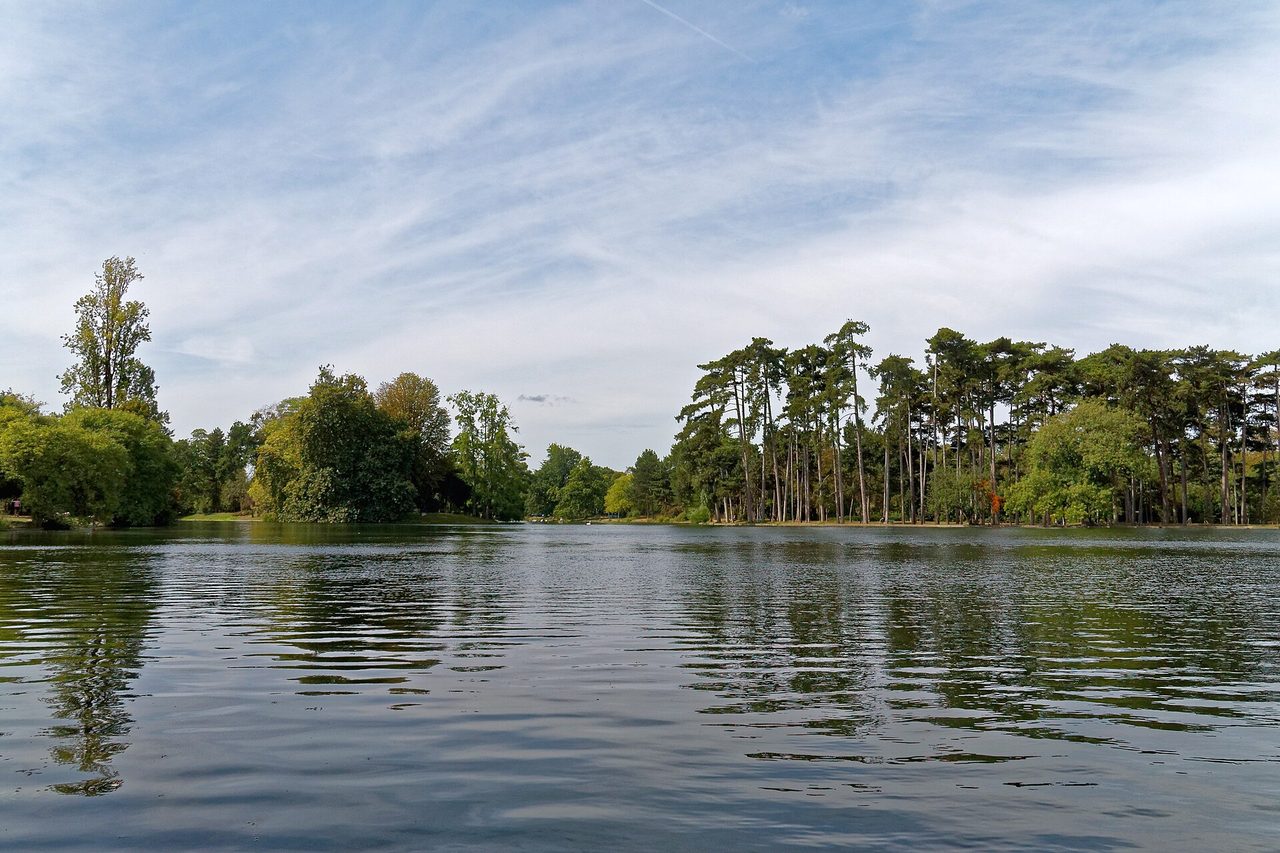 Photo: BikerNormand, CC BY-SA 2.0
About km 38
Avenue de l'Hippodrome passes the lake's southern tip in the Bois de Boulogne, a green, quiet stretch before the last climb.
For supporters
Bring water and words: it's a hard part of the race to be alone in.
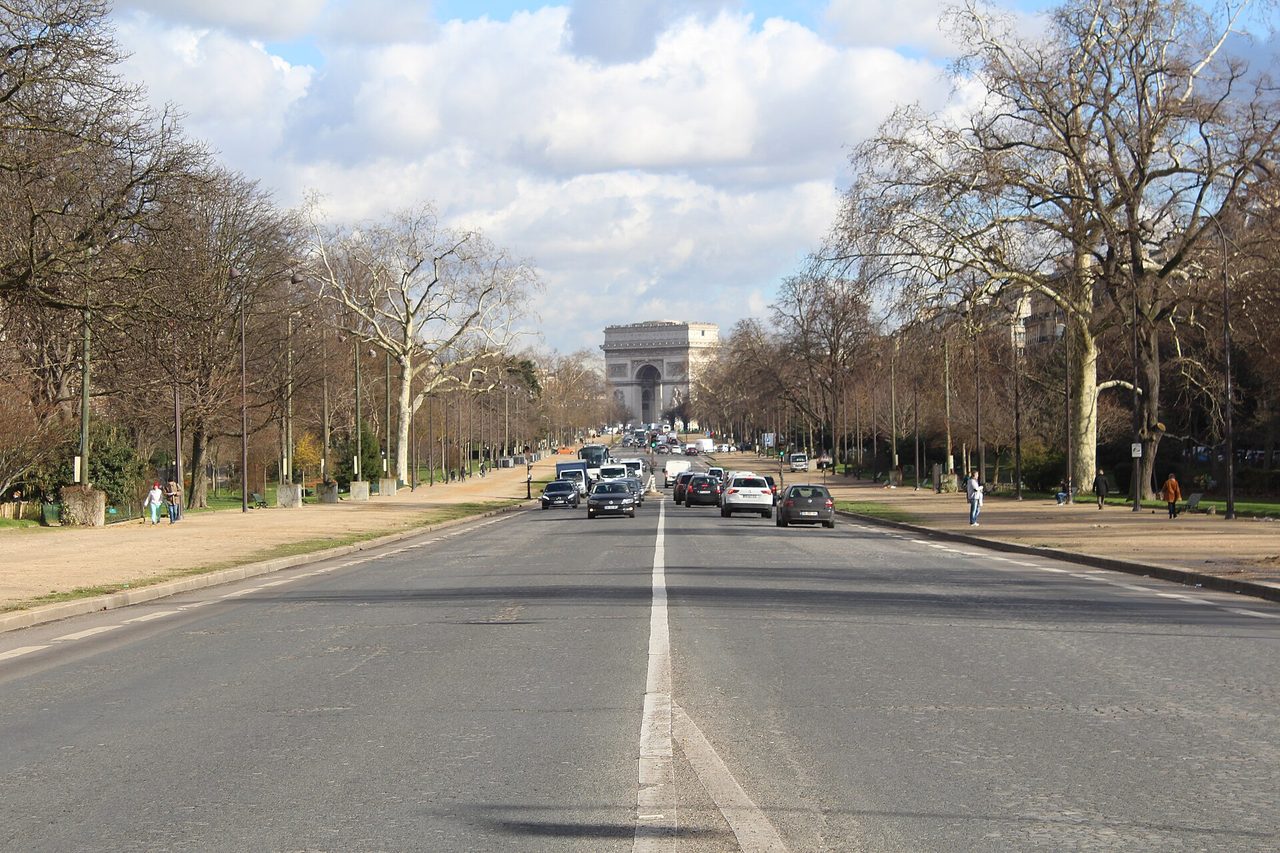 Photo: Chabe01, CC BY-SA 4.0
After the finish
After the line the runners' zone runs east along Avenue Foch towards the Arc de Triomphe, at the avenue's far end. The photo is from a February day.
For runners
Turn your back to the Arc and hold the medal at chest height, ribbon showing.
Ran Paris 2026?
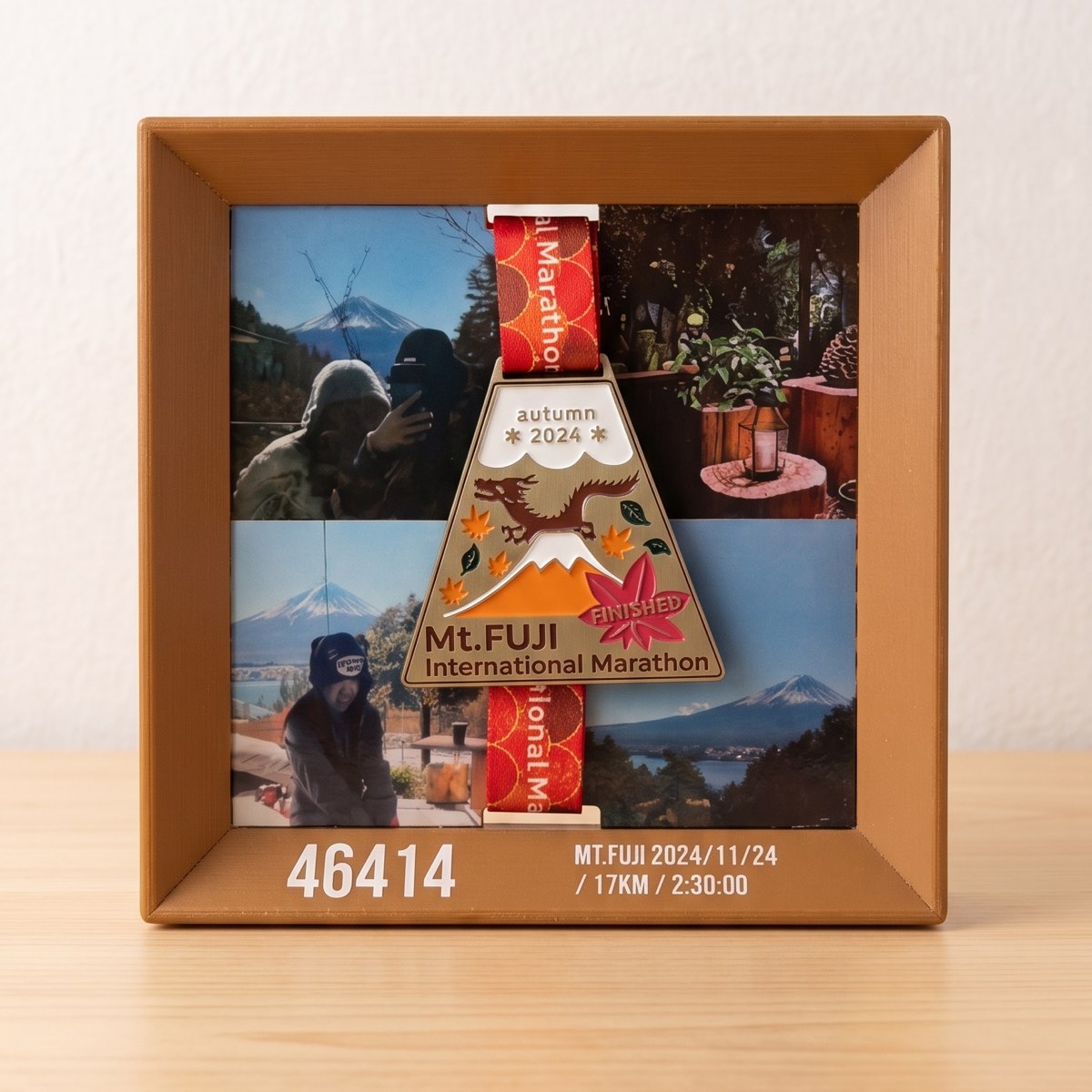
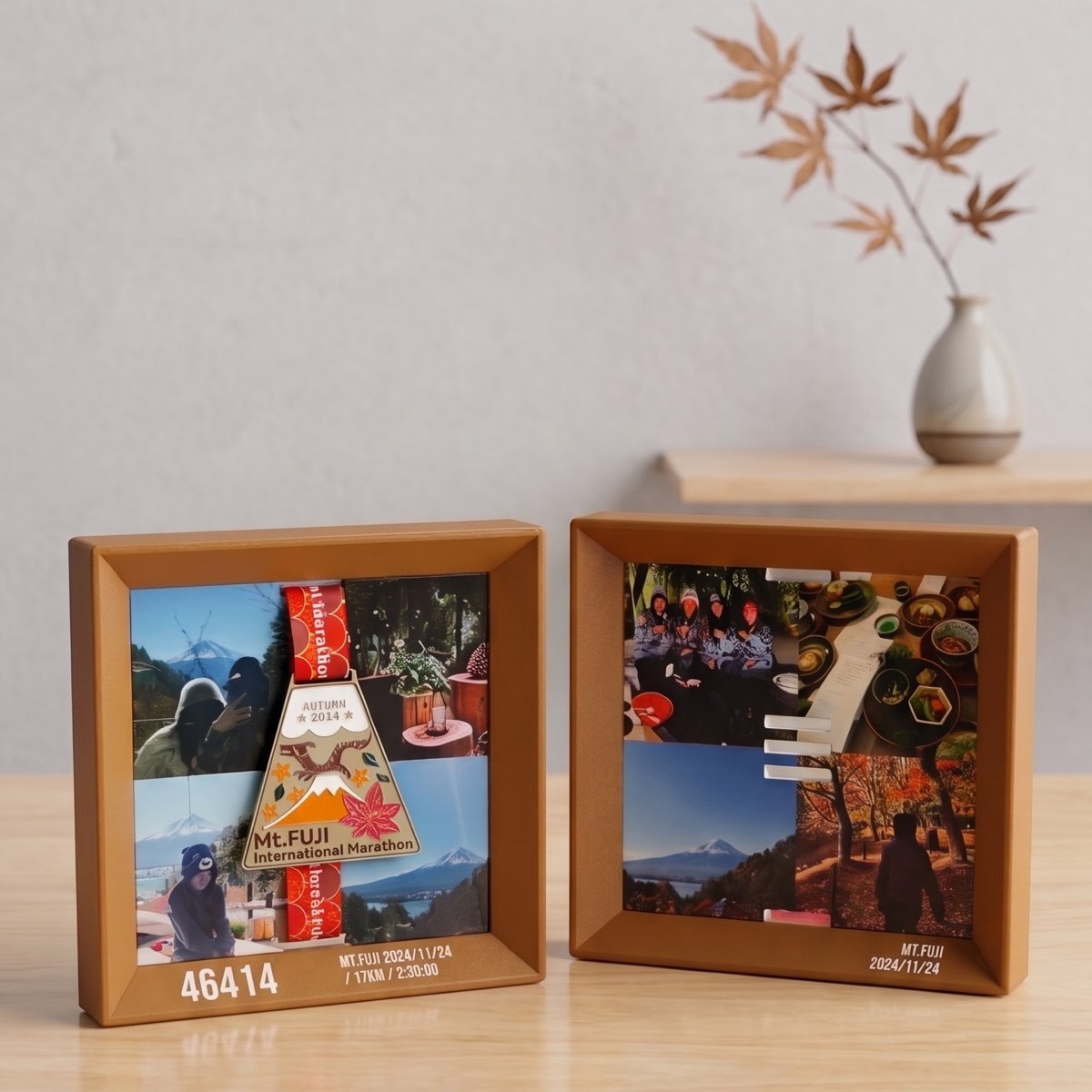
You ran from the Champs-Élysées to Avenue Foch. Now keep it: your 2026 medal, your photos from the day and your bib number, in one frame made to fit them.
From $35
42.195 km, point to point, all inside Paris: from the Champs-Élysées down to Place de la Concorde, up to the Palais Garnier and back to Rue de Rivoli, east through Bastille and Nation into the Bois de Vincennes, back to Bastille and down to the Seine, west along the river's right bank to the Eiffel Tower, through the Bois de Boulogne, and up past the Trocadéro and Place Victor Hugo to finish on Avenue Foch, near Porte Dauphine.
Pick a stretch, or click the course on the map, to see it close up.
km 0–4.8
The start is on the Champs-Élysées at Rue de Marignan, heading away from the Arc de Triomphe. Down the avenue to Place de la Concorde at about 1 km, along Rue de Rivoli beside the Tuileries, up Rue de Castiglione and Rue de la Paix, round the Palais Garnier, and back down Avenue de l'Opéra to the first full aid station, at km 4.8 beside the Louvre.
Start, Champs-ÉlyséesPalais GarnierAid station, km 4.8
The first kilometre is gently downhill and packed: settle into your pace before Concorde.
km 4.8–8.8
East along Rue de Rivoli past Châtelet (km 5) and the Hôtel de Ville, along Rue Saint-Antoine to Place de la Bastille at about 6.6 km, then up Rue du Faubourg Saint-Antoine, rising gently, to the aid station at km 8.8 and Place de la Nation.
Place de la BastilleUp the Faubourg Saint-AntoineAid station, km 8.8
km 8.8–13.4
South down Rue de Picpus (km 10), then east along Avenue Daumesnil through Porte Dorée into the Bois de Vincennes, past the Lac Daumesnil, to the Château de Vincennes, with an aid station at km 13.4.
10 km, Rue de PicpusChâteau de VincennesAid station, km 13.4
km 13.4–20.3
South-east down Route de la Pyramide (km 15), past INSEP, to Route de la Ferme and its aid station at km 16.5, around the course's first high point, then west along Avenue de Gravelle on the wood's southern edge (km 20) to Porte de Charenton and the aid station at km 20.3.
In the woodsAid stations, km 16.5 and 20.3
The rises in the wood are long and gentle: hold your effort, not your pace.
km 20.3–25
Back into the city along Rue de Charenton, past halfway and a water point at km 22.6, then Avenue Daumesnil, Rue de Lyon (aid station at km 24.1) and the Place de la Bastille for the second time, down Boulevard de la Bastille to the river at km 25.
Halfway, 21.1 kmWater, km 22.6Bastille again
km 25–29.7
West on the river's right bank, on the lower quay and the Voie Georges-Pompidou: past the Île Saint-Louis, with Notre-Dame and the Conciergerie across the water, under the Pont Neuf, past the Louvre and the Tuileries, beneath the Place de la Concorde and on to the Pont Alexandre III, with a water point at km 29.
Notre-Dame across the riverWater, km 29
The quays dip in and out of tunnels and underpasses: your watch can lose GPS there, so trust the km markers.
km 29.7–35.1
Up onto Avenue de New York at the Pont de l'Alma, facing the Eiffel Tower across the river at about km 30, with an aid station at km 30.6. On along Avenue du Président Kennedy (electrolyte drinks at km 32.2), Avenue de Versailles (water at km 32.6) and Boulevard Exelmans, to Boulevard d'Auteuil and the aid station at km 35.1.
Eiffel Tower, about km 30Aid stations, km 30.6 and 35.1
Look left as you come out onto Avenue de New York: it's the view of the race.
km 35.1–38.8
Into the Bois de Boulogne beside the Hippodrome d'Auteuil, north on Allée de la Reine Marguerite (water at km 37), then east along Avenue de l'Hippodrome, past the southern tip of the Lac Inférieur, to Avenue Ingres and the last aid station, at km 38.8.
In the woods againWater, km 37Last aid station, km 38.8
km 38.8–42.2
Along Avenue Paul Doumer (km 40) to the Trocadéro, then up Avenue Raymond Poincaré to Place Victor Hugo, at km 41 the top of the course on the organisers' profile. Down Avenue Hubert Germain to Avenue Foch near Porte Dauphine, and a turn back along it to the finish line.
Up to Place Victor Hugo, km 41Finish, Avenue Foch
The climb comes when you're tired, but it's the last one: from Place Victor Hugo it's downhill to Avenue Foch.
The organisers publish a course map, not a course file, and OpenStreetMap has no route for the race, so the line is the course traced along OpenStreetMap's streets from the official 2026 maps. Where the organisers give a km (aid stations, km markers, Place Victor Hugo), the text uses theirs; the other km are measured along the traced line.
Not very, but it isn't flat: the organisers put the climbing at 256 m up and 252 m down, in long gentle rises rather than steep hills. The course is flat through the centre and lowest along the Seine, rises into the Bois de Vincennes, and climbs again late: on the organisers' profile its highest point is Place Victor Hugo, at km 41, just a little above the high point in the wood.
Pace the rises by effort and keep something for the last 3 km. The chart below is drawn from a public elevation model on the traced course, so its heights are approximate: the organisers' own profile is on their site.
Heights are approximate. The organisers publish no course file, so these come from IGN's RGE ALTI bare-earth elevation model (Licence Ouverte) on the course as traced on OpenStreetMap's streets, smoothed over about 250 m: treat the shape as a guide, not the metres.
Hover or drag along the chart to read the heights.
km 0–4.8
The avenue drops gently from the start to Place de la Concorde, then the course loops up to the Opéra and back.
Don't bank time on the way down: the field is packed and the day is long.
km 6.6–9
From Bastille the road rises steadily to Place de la Nation.
A gentle drag: shorten your stride and let it come.
km 10–20
Long gentle rises through the wood to its high point near Route de la Ferme, then down along Avenue de Gravelle.
Hold your effort steady here: the time comes back on Avenue de Gravelle.
km 25–32
The lowest part of the course, flat along the river from Bastille to the Eiffel Tower.
Flat and fast: find a group and settle in.
km 38.8–41
Along Avenue Paul Doumer and past the Trocadéro, then up Avenue Raymond Poincaré to Place Victor Hugo at km 41, the top of the course on the organisers' profile.
Short steps and a steady cadence: it's the last climb.
km 41–42.2
From Place Victor Hugo it drops to Avenue Foch near Porte Dauphine, then turns back along the avenue to the line.
Use the downhill to the turn, then empty the tank.
In 2026 race week ran from the Run Experience's opening on Thursday 9 April to the marathon on Sunday 12 April, with the Paris Run For All 5 km and the children's races on the Saturday. Times marked Official are the organisers' 2026 times; the rest is our suggestion.
OfficialFrom the organisers' siteSuggestedOur adviceReportedFrom runners' reports
Your start group, by your expected time, is on your bib: each group has its own time to be in the start area and its own start. Nearest metro stations to the start: Charles de Gaulle–Étoile, Franklin D. Roosevelt and Porte Dauphine.
On Avenue Foch, in the finish area, near the Arc de Triomphe. Collect your bag there after the race, with your bib.
The Preferential group's time to be in the start area. Each group has its own, through to 11:12am for the 4h30 group, by the start area map.
Also the French Para Athletics Championships, for the sixth year running.
The men and the women together, with the Preferential group behind them.
3h00 at 8:03am, the French Handisport Federation at 8:19am, 3h15 at 8:22am, 3h30 at 8:44am, 3h45 at 9:34am, 4h00 at 10:19am, 4h15 at 11:10am and 4h30 at 11:32am, by the start area map.
Six hours from the last runner over the start line, behind the organisers' sweep vehicles. Anyone over the limit isn't ranked and gets no medal. The runner's guide put the last finishers at 6pm.
Leave the finish area by exit A, at Avenue Malakoff, with no bag to collect, or by exit B, towards Place de l'Étoile, with one. The family information point is at the Porte Dauphine end: agree a meeting spot a little away from the crowds.
5 km in the heart of Paris, open to everyone and not timed, with a free breakfast at the finish. All its entry fees went to Nightline, a mental health charity for young people.
Four free races of different lengths for children aged 5 to 12, each with a snack and a medal.
The organisers' own picks are the Seine's quays, from km 23 to 32, where the bridges give a view from above, and Place Victor Hugo at km 41, where runners need the support most. The course crosses Bastille twice, about 17 km apart. Paris's metro serves the whole course: plan your stations, don't cross the course, and agree a meeting point after the finish, away from the crowds on Avenue Foch.
Pick a photo to find it on the map.
Start
See the field leave, from the wheelchair start at 7:55am and the elite start at 8am to the last start group, 4h30, at 11:32am by the start area map.
Franklin D. Roosevelt or Charles de Gaulle–Étoile, metro
Photo: Guillaume Flament, CC BY-SA 4.0About km 6.6, and km 24
Runners come through twice: from Rue Saint-Antoine at about km 6.6, and again around km 24, from Rue de Lyon down to the river. Stay put and see them both times.
Bastille, metro lines 1, 5 and 8
Photo: Formulavee, CC BY-SA 4.0About km 13
Where the course reaches the château, before it turns south into the wood. Quieter than the centre, and the runners will be glad of you.
Château de Vincennes, metro line 1
Photo: Guilhem Vellut, CC BY 2.0Km 25 to 29
The organisers' pick: the runners pass below on the right bank's riverside road, and the bridges give you a view from above. The photo is the 2016 race, below the Conciergerie.
Pont Neuf or Châtelet, metro
About km 30
Opposite the Eiffel Tower, across the river, with an aid station at km 30.6. The Trocadéro gardens run down to the avenue here.
Iéna, metro line 9
Photo: Chabe01, CC BY-SA 4.0Finish
The public zones are at the Porte Dauphine end of the finish, with a giant screen and the family information point. The organisers also suggest Place Victor Hugo, at km 41, a short walk away.
Porte Dauphine, metro line 2
Dry and cold at the start, warming slowly: 5.0°C at 8am at Paris-Montsouris, 7.9°C at 10am and a high of 14.5°C in the afternoon, with light winds and no rain (Météo-France). The organisers published no race-day reading of their own. For the next race's forecast, see the official site in race week.
Sunrise at 7:05am, an hour before the elite start
202612 Apr
Dry, cold at the start and light winds, at Paris-Montsouris (Météo-France)
5°C at 8amHigh 14.5°C
202513 Apr
Mild and dry through the race, at Paris-Montsouris (Météo-France)
12.7°C at 8amHigh 18°C
From 2027 the race is the ASICS Marathon de Paris, with a new official site. For 2026 places went first come, first served on the organisers' entry platform, alongside charity, company and tour-operator places. The ways in, the dates and the latest news are on the official site.
Through the organisers' own entry platform, opened months before the race. For 2026 places went first come, first served; for 2027 press reports describe a draw. The official site has the next window.
Run for one of the race's partner charities and raise funds for it: about 8,500 charity runners ran in 2026.
Companies can enter teams of employees, through the organisers' corporate offer.
Travel packages with a place in the race, from the organisers' partner tour operators.
Runners who can't run can pass their place on through the organisers' own resale platform, where others can buy it.
Prices, dates and how to apply are on the official site: asicsmarathondeparis.com/en
Yemaneberhan Crippa of Italy won the men's race in 2:05:18, ahead of Bayelign Teshager (2:05:23) and Sila Kiptoo (2:05:28). Shure Demise of Ethiopia won the women's race in 2:18:34, a course record, ahead of Misgane Alemayehu (2:19:08) and Magdalyne Masai (2:19:17). Thibault Daurat of France won the men's wheelchair race in 1:32:19.
The 2026 race site has gone offline since the race passed to new organisers. The elite results are on World Athletics, and L'Équipe printed every finisher's name and time in a supplement on Monday 13 April 2026.
Dry and cold at the start: 5.0°C at 8am at Paris-Montsouris, rising to a high of 14.5°C, with light winds and no rain (Météo-France).
58,853 runners started and 57,464 finished, by the organisers' count. Almost half were running their first marathon, a third were women and 29% came from abroad, the largest groups from the UK and the USA. The organisers counted about 200,000 spectators.
A recycled T-shirt, a hydration vest and a reusable folding cup, all collected with the bib, and a medal at the finish. On race day and the day after, shops around Paris gave finishers offers when they showed their medal.
No: no cups or bottles were handed out, and runners filled their own container with City of Paris tap water. Full aid stations, with food, were at km 4.8, 8.8, 13.4, 16.5, 20.3, 24.1, 30.6, 35.1 and 38.8, with water points at km 22.6, 29, 32.6 and 37, and toilets near each.
Six hours from the last runner crossing the start line, with the organisers' sweep vehicles behind the field. Runners over the limit, or passed by the sweep, weren't ranked and didn't get a medal.
Every runner, foreign runners included, needed an FFA licence or a PPS (Parcours Prévention Santé) certificate from the French athletics federation, under three months old. A foreign club licence wasn't enough.
The 50th Paris Marathon is on Sunday 4 April 2027, under its new name, the ASICS Marathon de Paris.
In 2026 it started on the Champs-Élysées, at Rue de Marignan, and finished on Avenue Foch, near Porte Dauphine. The organisers of the 2027 race say it starts on the Champs-Élysées and finishes on Avenue Foch again.
Not very: the organisers put the climbing at 256 m up and 252 m down, in long gentle rises rather than steep hills. It is flattest along the Seine, rises through the Bois de Vincennes, and on the organisers' profile reaches its highest point near the end, at Place Victor Hugo, km 41.
It runs along the opposite bank of the Seine, on Avenue de New York, facing the tower across the river at about km 30. It also passes the Place de la Concorde, the Palais Garnier, the Louvre, Bastille, the Château de Vincennes and, across the river, Notre-Dame.
No. As of November 2026 Paris isn't one of the Abbott World Marathon Majors listed on worldmarathonmajors.com, but it is one of the world's biggest marathons: 58,853 runners started it in 2026.
Anywhere along the course, by metro. The organisers suggest the Seine's quays from km 23 to 32, where the bridges give a view from above, and Place Victor Hugo at km 41. The course crosses Bastille twice, at about km 6.6 and km 24, and there were 19 cheering zones along it in 2026.
Agree a spot before the race, a little away from the crowds. Runners leave the finish area by exit A, at Avenue Malakoff, if they have no bag to collect, or by exit B, towards Place de l'Étoile, if they do. The family information point is at the Porte Dauphine end of the finish.
The City of Paris says it has been held every year since 1976. The 2026 race was the 49th, and the 2027 race, on Sunday 4 April, is the 50th.
The map data is © OpenStreetMap contributors, under the Open Database Licence.