An independent guide, checked against the official site10 min readCourse from the official file
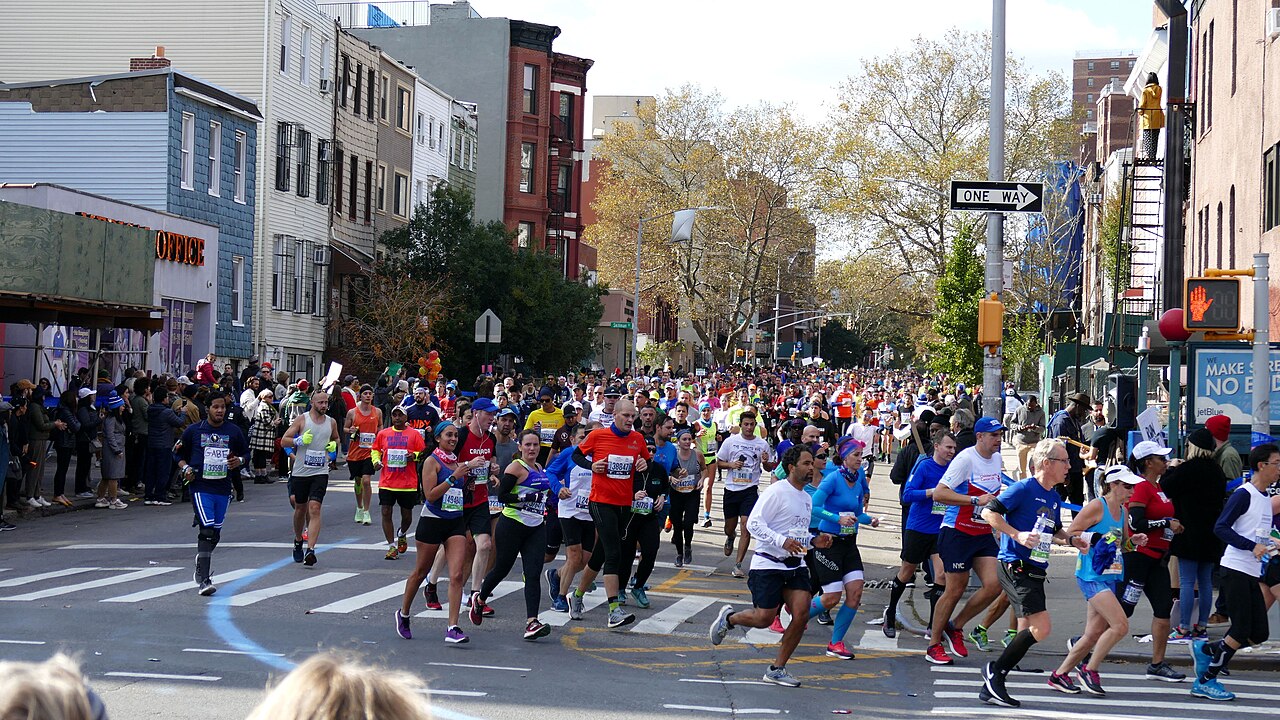
The 2026 New York City Marathon, officially the TCS New York City Marathon, ran on Sunday 1 November, from Staten Island through all five boroughs to Central Park, 50 years after the race first left the park for the city's streets. 61,529 started and 61,146 finished, the first marathon ever with more than 60,000 finishers.
Andreas Almgren of Sweden won in 2:06:01, in his first marathon, with a move in the last mile. Sheila Chepkirui of Kenya won the women's race in 2:24:36, her second New York title in three years.
2026 results: how it went
Men
2:06:01
Andreas Almgren, in his debut
Women
2:24:36
Sheila Chepkirui, her second title
Wheelchair
1:28:14
Marcel Hug, his eighth New York win
Finishers
61,146
From 153 countries
Almgren ran with the leaders until a mile from the finish, then pulled away from Yeman Crippa of Italy and Kamohelo Mofolo of Lesotho: the first Swede to win any division in New York, and the first debutant to win the men's race since 2010. Zouhair Talbi was the first American, sixth in 2:06:43. In the women's race Jess McClain came from behind to outsprint the 2025 champion, Hellen Obiri, for second in 2:24:42, the first American woman on the podium since 2018. Marcel Hug won the men's wheelchair race by one second from Daniel Romanchuk, and Catherine Debrunner the women's in 1:40:02, almost eight and a half minutes clear.
Five bridges, the climb up Fifth Avenue and the rolling roads of Central Park in the last miles make it a course to pace with care. Andreas Almgren won the 2026 race in 2:06:01, in his first marathon.
Difficulty
3/5 · Rolling
The bridges are the hills
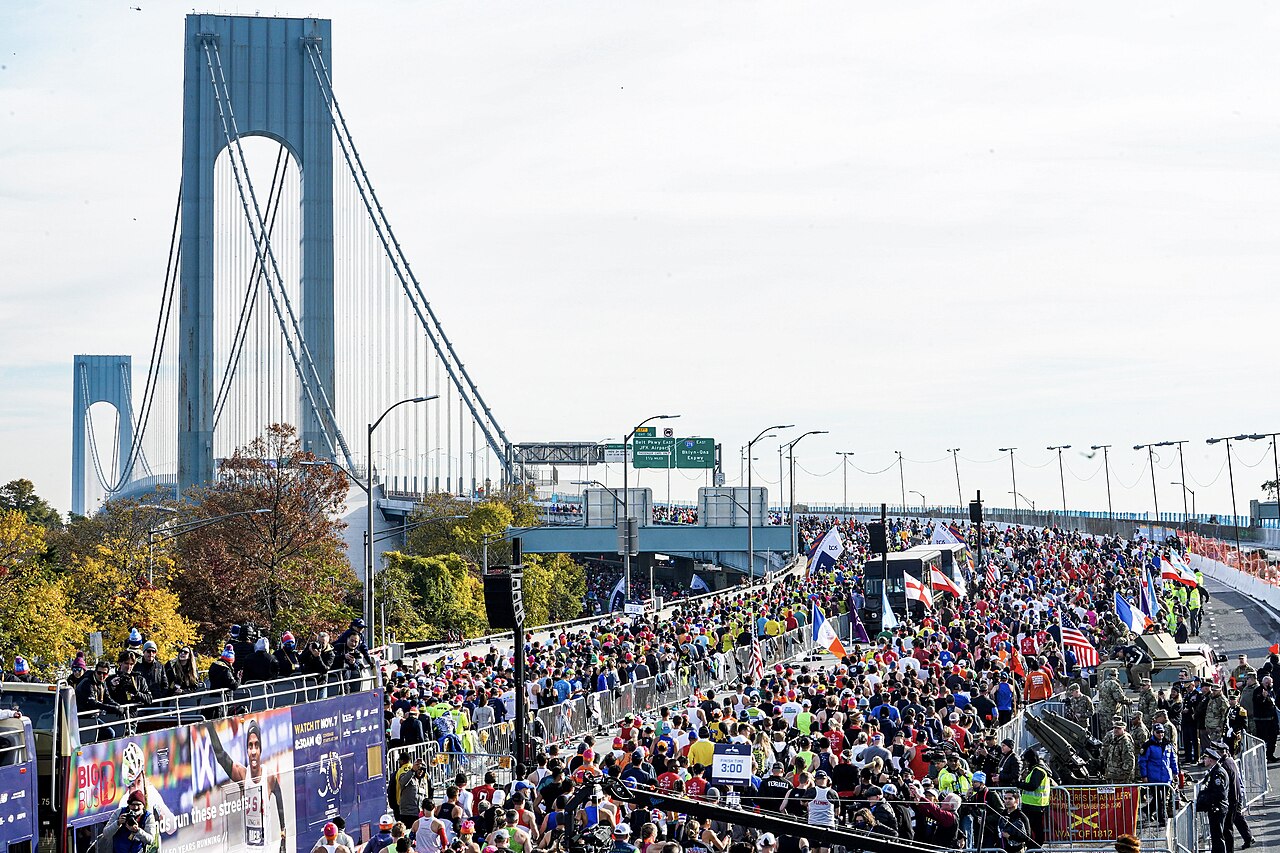
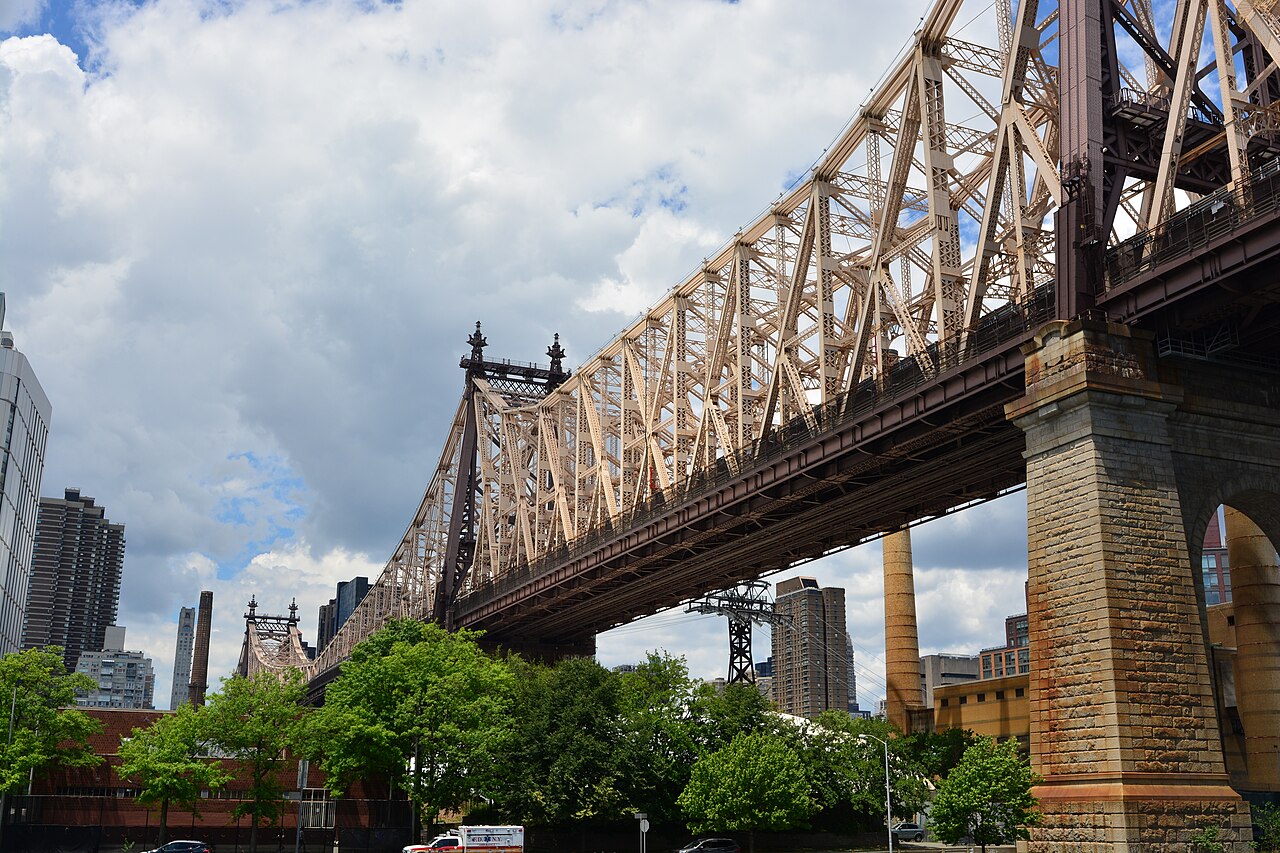
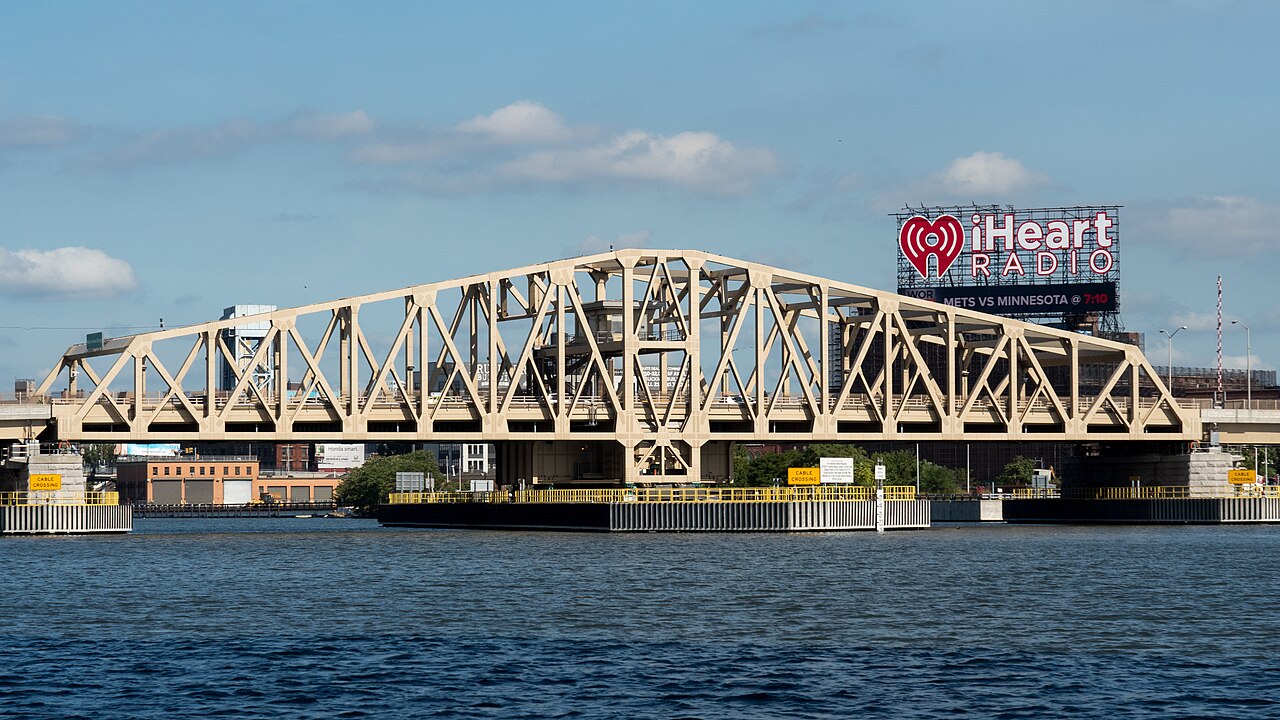
The course climbs onto the Verrazzano-Narrows Bridge from the start, then over the Pulaski, Queensboro, Willis Avenue and Madison Avenue bridges, with the long drag up Fifth Avenue beside Central Park near the end.
Best moment
Off the Queensboro Bridge onto First Avenue
After the quiet of the bridge, where spectators aren't allowed, the course comes down into Manhattan at mile 16, onto First Avenue and its crowds.
Anyone who wants the biggest marathon in the world: 61,146 finished in 2026
Runners who want to see all five boroughs on foot
Runners who train for the bridges and a late climb on Fifth Avenue
02
Where to take the best photos at the New York City Marathon
The course gives you a bridge to start on, the city's avenues, the bridges with Manhattan ahead and Central Park to finish. Our picks, for supporters with a camera and for runners who carry a phone: step to the side before you stop. The organisers' photographer, MarathonFoto, is on the course too, and takes pictures of every finisher on Central Park West after the race.
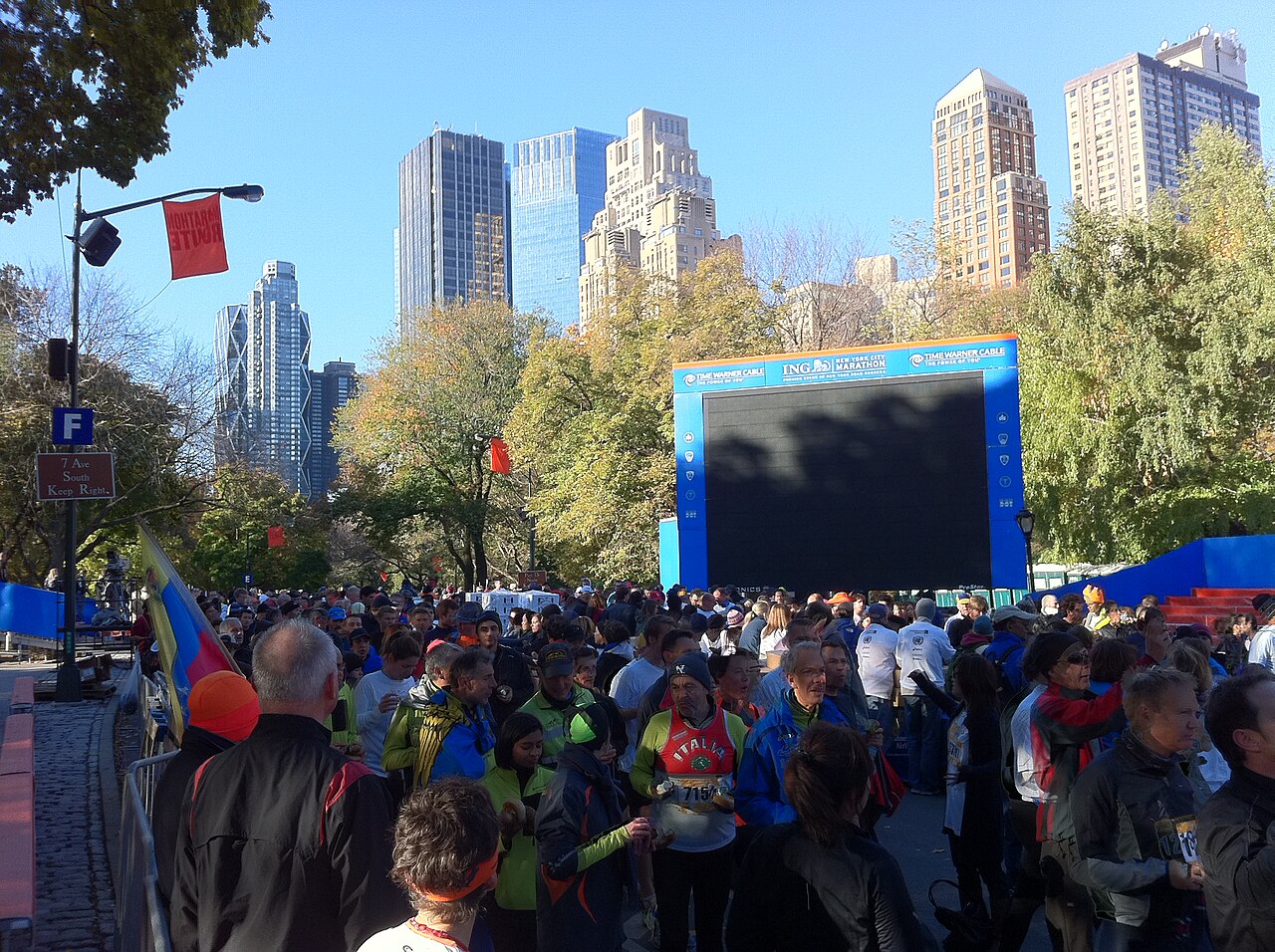
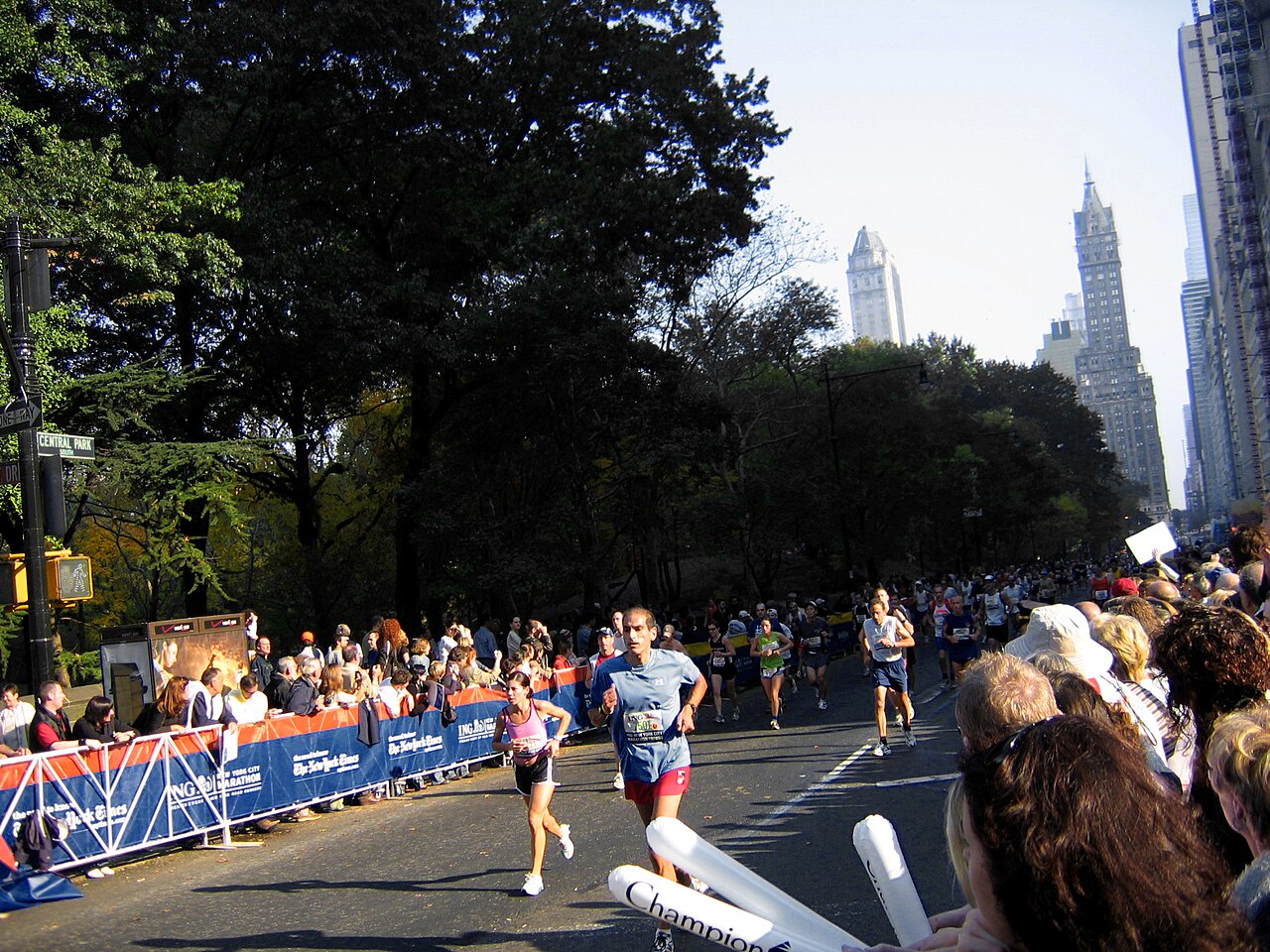
The finish on West Drive at 67th Street, with the towers of Central Park South above the trees.
For runners
Arms up, a step before the line.
03
Frame your memory
Ran New York 2026?
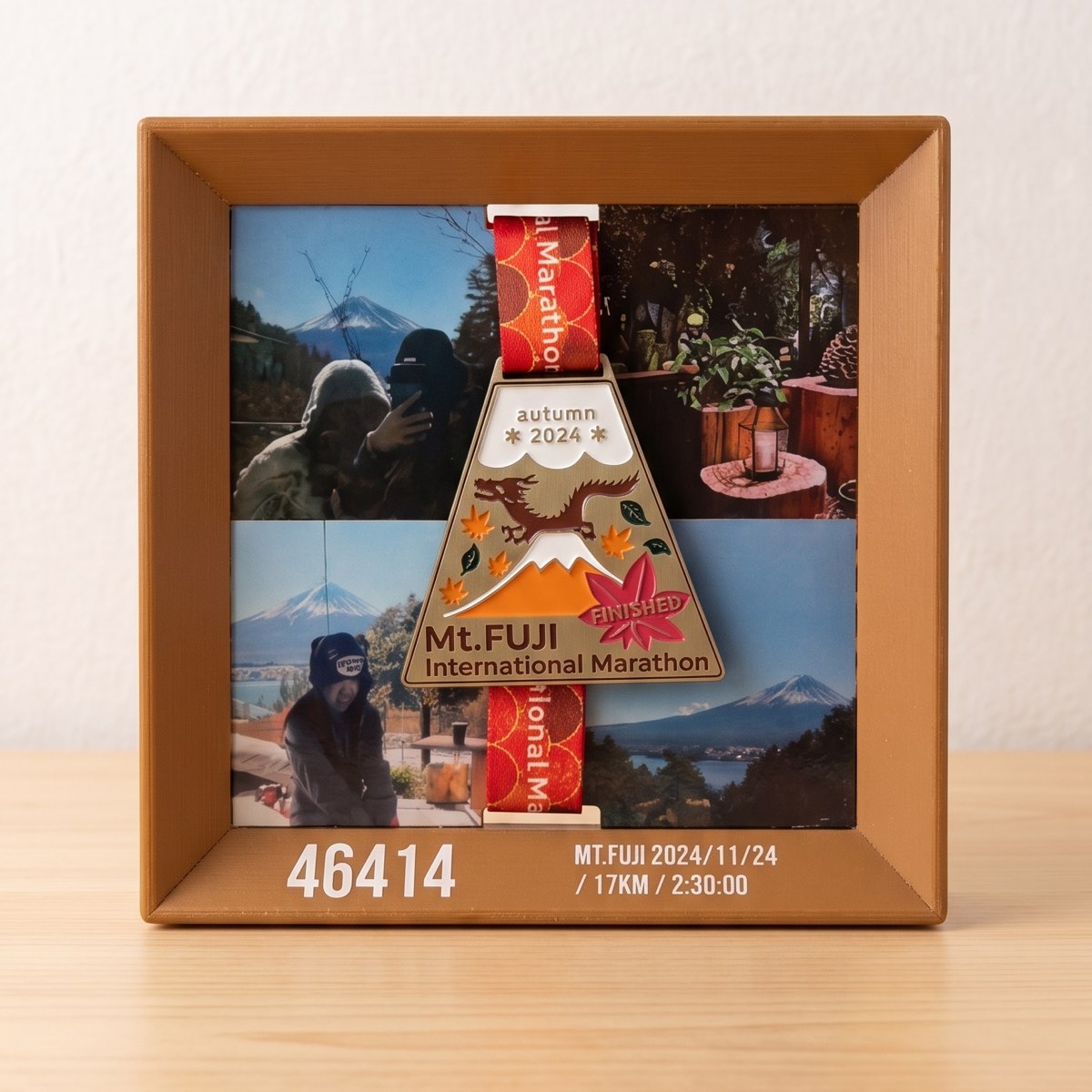
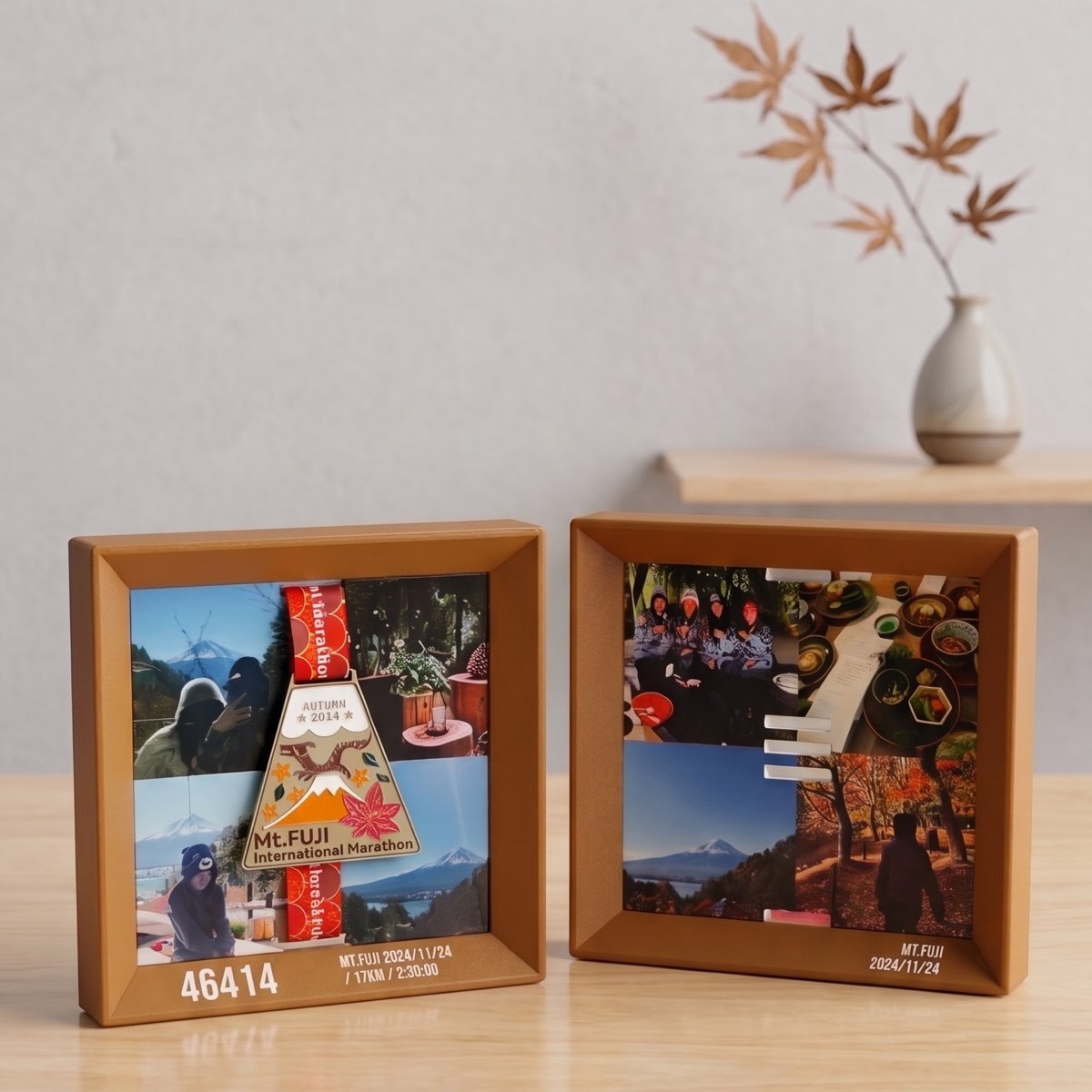
Frame your 2026 New York City Marathon medal
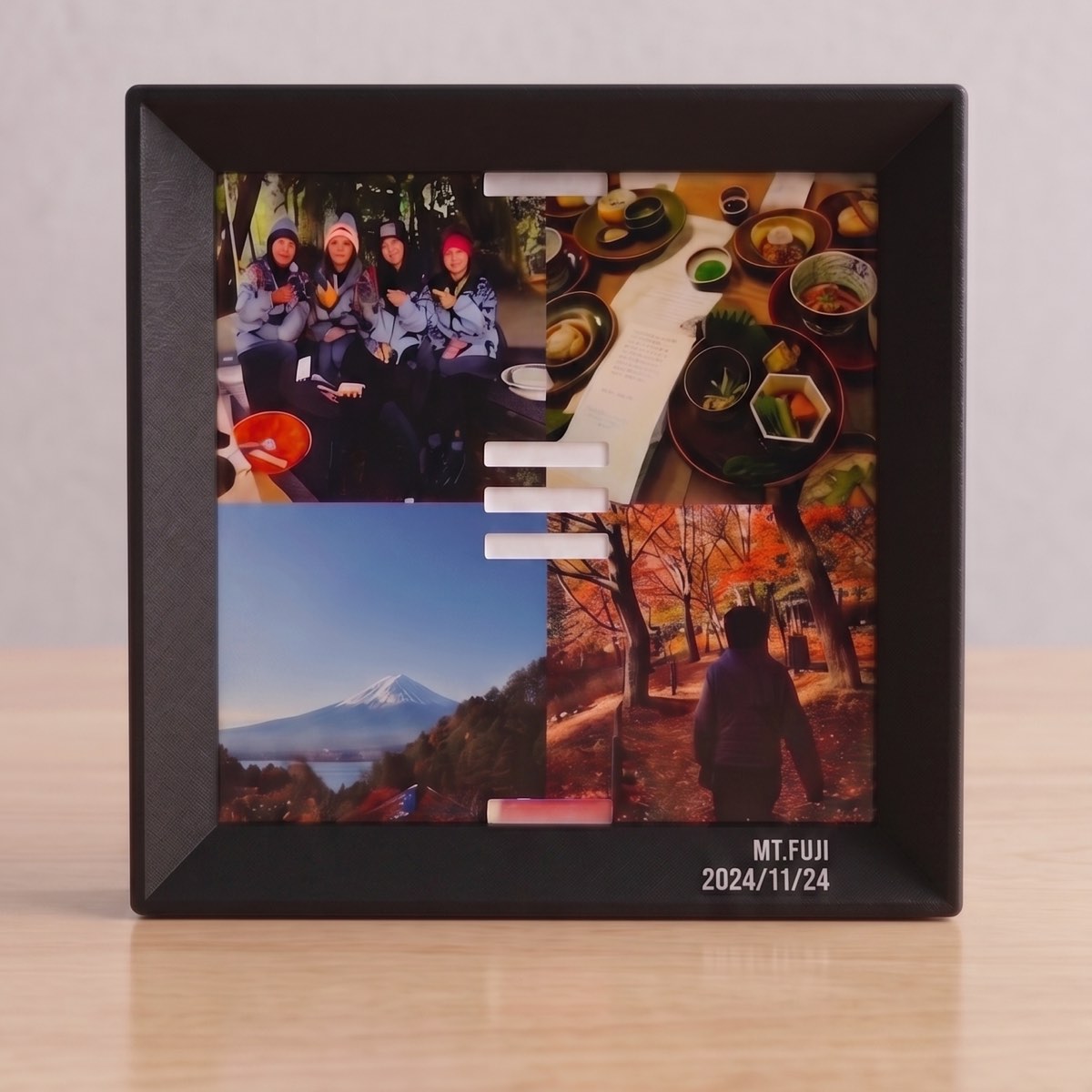
You ran from Staten Island to Central Park, over five bridges and through five boroughs. Now keep it: your 2026 medal, your photos from the day and your bib number, in one frame made to fit them.
Made to fit your medal and its ribbon, 2, 3 or 4 cm wide
A favourite race-day photo behind the medal
Your finishing time or a message of your own on the front
Designed on a live preview, 3D-printed to order in white, cream or black
From $35
Text On Frame $45 · Custom Pictures $45 · Text and Pictures $60
The New York City Marathon course, section by section
26.2 miles (42.195 km), point to point through all five boroughs: from Fort Wadsworth on Staten Island over the Verrazzano-Narrows Bridge into Brooklyn, up Fourth Avenue and through Fort Greene, Williamsburg and Greenpoint, over the Pulaski Bridge into Queens at halfway, over the Queensboro Bridge into Manhattan and up First Avenue, over the Willis Avenue Bridge into the Bronx and back over the Madison Avenue Bridge, then down Fifth Avenue and through Central Park to the finish on West Drive at 67th Street.
For 2026, the first change in 15 years: in the Bronx, after the Willis Avenue Bridge, the course turns left onto East 135th Street, right onto Alexander Avenue, left onto East 141st Street, left onto Third Avenue and right onto East 138th Street, to the Madison Avenue Bridge.
Pick a stretch, or click the course on the map, to see it close up.
0 km51015202530354042.2
km 0–3.2
Staten Island and the Verrazzano
The start is at Fort Wadsworth on Staten Island, at the foot of the Verrazzano-Narrows Bridge, and the first mile climbs onto the bridge. There are no spectators at the start or on the bridge: the course comes down into Brooklyn at Bay Ridge.
Three starts: Blue, Orange, PinkUp the bridge from the line
It's quiet up there, and the view is the city: take it in, and let the bridge set an easy first mile.
km 3.2–12.9
Fourth Avenue
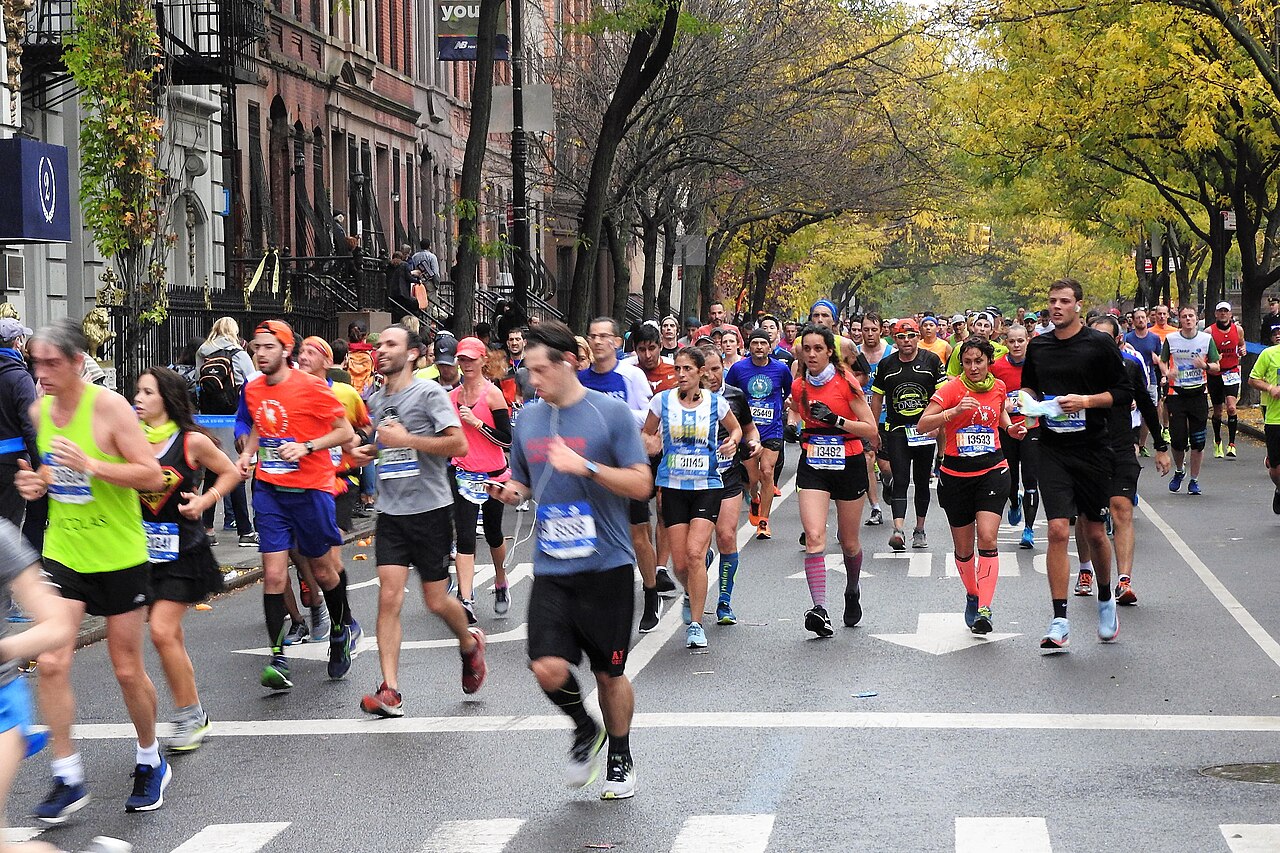
Up Fourth Avenue through Bay Ridge, Sunset Park and Park Slope, with water and Gatorade from mile 3 and the first crowds of the day, to the corner of Flatbush Avenue at mile 8, where the three starts' courses have joined.
Fluids from mile 310 km in Park Slope
km 12.9–19.3
Fort Greene to Williamsburg
Along Lafayette Avenue through Fort Greene and Clinton Hill, then north on Bedford Avenue through Williamsburg, to the first gels at mile 12.
NYRR member cheer zone, Lafayette AvenueGels, mile 12
km 19.3–21.1
Greenpoint and the Pulaski Bridge
Through Greenpoint on Manhattan Avenue and McGuinness Boulevard to the Pulaski Bridge, the second of the five, which crosses Newtown Creek into Queens. Halfway is on the bridge.
Halfway, on the Pulaski Bridge
km 21.1–25.8
Queens and the Queensboro Bridge
Hardest
A short loop through Long Island City, then onto the Queensboro Bridge at mile 15, over the East River and Roosevelt Island. It's the longest climb since the start, and quiet: spectators aren't allowed on any of the bridges.
Queensboro Bridge, miles 15 to 16
Run the bridge by effort, not pace. The noise of First Avenue is waiting at the bottom.
km 25.8–31.4
First Avenue
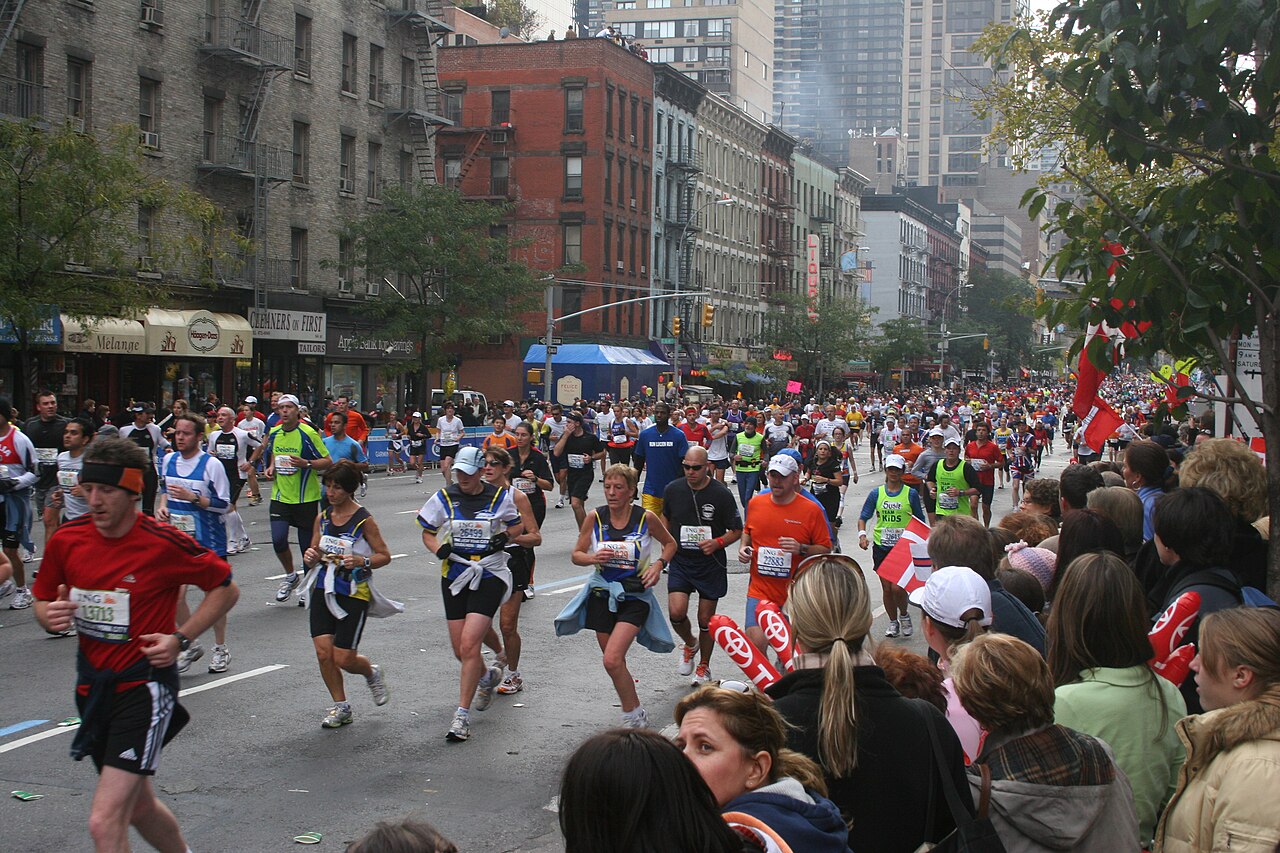
Down off the bridge at mile 16 and north on First Avenue through the Upper East Side and East Harlem, with crowds lining both sides, gels at mile 18 and the charity cheer zone at First Avenue and 120th Street, to the Willis Avenue Bridge.
Gels, mile 18Charity cheer zone, 120th Street
The crowds make it easy to run too fast here. Hold your pace: there are ten miles to go.
km 31.4–37
The Bronx and Harlem
Over the Willis Avenue Bridge into the Bronx, through Mott Haven on the new 2026 turns, and back over the Madison Avenue Bridge into Harlem, then south on Fifth Avenue, past the NYRR member cheer zone at 125th Street and bananas at mile 21.
The Bronx, mile 20Bananas, mile 21
km 37–38.3
Up Fifth Avenue
Hardest
Around miles 23 and 24 the course climbs Fifth Avenue beside Central Park, from East 105th Street down to East 90th Street, then turns into the park.
The climb, around miles 23 to 24
This is where a race is won or lost. Shorten your stride and keep your arms going.
km 38.3–42.2
Central Park to the finish
Into Central Park and down its east side, out along Central Park South to Columbus Circle, and back into the park for the last stretch, to the finish on West Drive at 67th Street.
Central ParkFinish, West Drive at 67th Street
The roads in the park roll. Save one push for the turn back into the park at Columbus Circle.
The line is the organisers' own: the Blue course of the official course map, from the Blue start. The three starts, Blue, Orange and Pink, take their own lines over the bridge and through Bay Ridge, and meet by mile 8. The miles in the text are the organisers' own and the km are those miles converted, except where a place has no official mile: those km are measured along the line.
05
How hilly is the New York City Marathon?
Not by its streets, but by its bridges. The course climbs onto the Verrazzano-Narrows Bridge from the start and over four more: the Pulaski at halfway, the long Queensboro at miles 15 to 16, and the Willis Avenue and Madison Avenue bridges into the Bronx and back. Then, at miles 23 and 24, comes the climb up Fifth Avenue beside Central Park, and the park's rolling roads to the finish.
The organisers don't publish heights, so the chart below is our approximation: the course from a public elevation model, with each big bridge drawn rising to its published height above the water.
5BridgesOfficial
Miles 15–16The Queensboro BridgeOfficial course map
Miles 23–24Fifth Avenue's climbOfficial
2:06:01The 2026 winning timeAndreas Almgren
0 m40 m80 mVerrazzanothe first milePulaskiat halfwayQueensboromiles 15 to 16Fifth Avenuemiles 23 to 24
0 km51015202530354042.2
Heights are approximate. The organisers publish no heights, so these come from the US Geological Survey's 10 m bare-earth elevation model (public domain) on the official line, smoothed over about 250 m. The model reads a bridge as the water under it, so the Verrazzano-Narrows, Pulaski and Queensboro bridges are drawn rising to each one's published clearance above the water at mid-span: treat the shape as a guide, not the metres.
Hover or drag along the chart to read the heights.
Where it bites
km 0–1.5
Up the Verrazzano
From the line at Fort Wadsworth the course climbs onto the bridge, and comes down the other side into Brooklyn.
Let the climb slow you. Everyone around you is going too fast.
km 3.2–12.9
Fourth Avenue
Miles of straight avenue through Bay Ridge, Sunset Park and Park Slope, with the crowds starting from mile 3.
Settle into your pace here: it's the easiest running of the day.
km 20.8–21.7
The Pulaski Bridge
A short climb over Newtown Creek from Brooklyn into Queens, with halfway on the bridge.
Check your halfway split, then forget it.
km 24–25.8
The Queensboro Bridge
The longest climb since the start, over the East River and Roosevelt Island, with no spectators, then down into Manhattan at mile 16.
Hold an even effort up, and don't charge down onto First Avenue.
km 31.4–34
Into the Bronx and back
Two short bridges over the Harlem River, the Willis Avenue Bridge into the Bronx and the Madison Avenue Bridge back, around mile 20.
Twenty miles in, they feel bigger than they are. Keep it steady.
km 37–38.3
Fifth Avenue
Miles 23 and 24 climb Fifth Avenue beside Central Park, from East 105th Street to East 90th Street, before the course turns into the park.
The last real climb: once you're in the park, it rolls to the finish.
06
Race week and race morning
In 2026 race week ran from the Kids Kickoff in Central Park on Sunday 25 October to the marathon on Sunday 1 November, with the Expo from Thursday to Saturday, the Opening Ceremony on Friday and the Abbott Dash to the Finish Line 5K on Saturday morning. Times marked Official are the organisers' 2026 times; the rest is our suggestion.
OfficialFrom the organisers' siteSuggestedOur adviceReportedFrom runners' reports
Race week
Race morning: start times and a suggested schedule
Start
Fort Wadsworth, Staten Island
Finish
Central Park, West Drive at 67th Street
Waves
Five, from 9:10am to 11:30am
Official until
10pm
Your transport's departure time comes from NYRR, by your pace. NYRR's travel estimates to the start run from 60 to 90 minutes, before security: allow for them.
The bridge closes to traffic
Official
Coming by car, taxi or rideshare? You must be dropped at McClean and Ocean Avenues, outside Fort Wadsworth, before the Verrazzano-Narrows Bridge closes at 7am, and walk about half a mile to the start villages.
Fort Wadsworth
Settle in at your start village
Suggested
Coffee, tea, bagels, water and Gatorade, and more than 1,600 toilets across the villages and corrals. Bring old layers to wear and leave in the donation bins.
The wheelchair races start
Official
Men at 8am and women at 8:02am, then handcycles and select athletes with disabilities at 8:22am.
Wave 1's corrals open
Official
And close at 8:45am. The later waves' corrals open 30 to 40 minutes before their starts: the full table is on the official site.
The professional fields start
Official
The women at 8:35am and the men at 9:05am.
Wave 1 starts
Official
Then wave 2 at 9:45am, wave 3 at 10:20am, wave 4 at 10:55am and wave 5 at 11:30am.
Finish
Your medal, poncho and recovery bag
Official
Then the walk north through the park to the exit at West 77th Street, which takes 20 to 30 minutes, with photos on Central Park West.
After
Meet your people
Official
At Family Reunion on West 69th to 71st Streets, open 11am to 6pm, by the first letter of the runner's last name: A–F on 71st, G–N on 70th, O–Z on 69th.
10pm
The official finish closes
Official
Everyone who finishes by 10pm gets a medal and an official result, whenever they started. Later finishers still get the medal, but no official result.
Start
The United Nations, East 42nd Street
Finish
The marathon finish line
The Abbott Dash to the Finish Line 5K
Official
From the United Nations along 42nd Street past Grand Central, up Sixth Avenue past Radio City and through Central Park to the marathon's finish line: more than 11,500 ran it in 2026.
The Expo's last day
Official
At the Javits Center until 5pm, with bib pickup until 4:30pm.
07
Where to watch the New York City Marathon
Most of the course is open to spectators from mile 3 to mile 26, but not the start, the Verrazzano-Narrows Bridge or any of the other bridges: plan your spots by subway, and check the MTA's race-day service first. Follow your runner in the free New York Road Runners app, stay behind the tape or barriers, and agree a meeting point: Family Reunion is on West 69th to 71st Streets, by the first letter of the runner's last name. On Fifth Avenue between East 90th and 105th Streets, around miles 23 and 24, you catch your runner on the last climb, just before Central Park.
The organisers' first pick: catch the runners as they come off the Verrazzano-Narrows Bridge and head up Fourth Avenue through Bay Ridge. Fourth Avenue then runs on through Sunset Park and Park Slope to mile 8.
The turn from Lafayette Avenue onto Bedford Avenue, then north through Williamsburg and Greenpoint, where the organisers suggest claiming a spot on streets lined with shops and restaurants, miles 10 to 13.
Spectators line the sidewalks after the runners come off the Queensboro Bridge, and the bars and restaurants add to the noise. To cross the avenue, use the pedestrian crossing zones at 72nd and 83rd Streets. The charity cheer zone is further up, at 120th Street.
The runners come over the Willis Avenue Bridge into the Bronx for a short loop through Mott Haven, on the course's new turns for 2026, then back over the Madison Avenue Bridge.
Along the south edge of the park to Columbus Circle, where the course turns back into the park for the last stretch. The organisers' United Airlines Zone is at Columbus Circle.
The grandstands by the finish need tickets. Otherwise, the standing area inside the park runs from Columbus Circle to the south end of the grandstands, about 500 feet before the line, with entrances at Broadway and West 61st Street and on the east side by Heckscher Fields. Its access may be limited when it's full.
A, C, D or 1 train to 59th Street–Columbus Circle
08
Race-morning weather
Dry, cool and bright: the organisers called them ideal conditions. In Central Park the day's low was 5.6°C and its high 15°C, with no rain (NOAA). The clocks went back an hour that morning, at the end of daylight saving time. For the next race's forecast, see the official site and the NYRR app in race week.
6°CCentral Park's low15°CCentral Park's high
0°C10°C20°C30°C
Sunrise about 6:25am, nearly three hours before Wave 1
Recent race mornings
20261 Nov
Dry, in what the organisers called ideal conditions: Central Park (NOAA)
Low 5.6°CHigh 15°C
20252 Nov
Dry, in Central Park (NOAA)
Low 6.1°CHigh 15°C
09
How to get into the New York City Marathon
Most runners get in through a guaranteed entry or the non-guaranteed drawing. For 2027 NYRR says its charity partners and international tour operators will be announced in 2027, and the drawing's dates are still to come: check the official site for them.
The drawing
Runners without a guaranteed entry can apply to the non-guaranteed drawing in its application period. NYRR members who apply are also entered in a members-only second-chance drawing.
A charity place
Run for one of NYRR's Official Charity Partners, or for NYRR Team for Kids, and fundraise for a guaranteed entry.
An international tour operator
Runners who don't live in the United States full-time can book a package with guaranteed entry, often with a hotel or flights, through an Official International Tour Operator.
9+1, and other guaranteed ways
NYRR members who run nine qualifying NYRR races and volunteer at one earn a guaranteed entry for the next year. So do time qualifiers, runners on their 15th New York finish, and NYRR's philanthropic members.
Questions runners ask about the New York City Marathon
Who won the 2026 New York City Marathon?
Andreas Almgren of Sweden won the men's race in 2:06:01, in his marathon debut, ahead of Yeman Crippa and Kamohelo Mofolo. Sheila Chepkirui of Kenya won the women's race in 2:24:36, ahead of Jess McClain (2:24:42) and Hellen Obiri. Marcel Hug won the men's wheelchair race in 1:28:14 and Catherine Debrunner the women's in 1:40:02.
Where can I find my 2026 result?
On NYRR's results site, results.nyrr.org, linked from the race results page of nyrr.org/tcsnycmarathon.
How many people ran the 2026 New York City Marathon?
61,529 started and 61,146 finished, from 153 countries: the largest marathon ever, and the first with more than 60,000 finishers. 15,745 finishers came from outside the United States.
What was the weather like at the 2026 New York City Marathon?
Dry and cool, in what the organisers called ideal conditions. In Central Park the day's low was 5.6°C and its high 15°C, with no rain (NOAA).
What did 2026 finishers get?
A finisher's medal, a post-race poncho and a recovery bag at the finish, and a race shirt, collected with the bib at the Expo. The 2026 medal marked 50 years of the five-borough course: a gold-finished skyline in a sunburst, with the five bridges, 3.5 inches across.
Where were the drinks and gels in 2026?
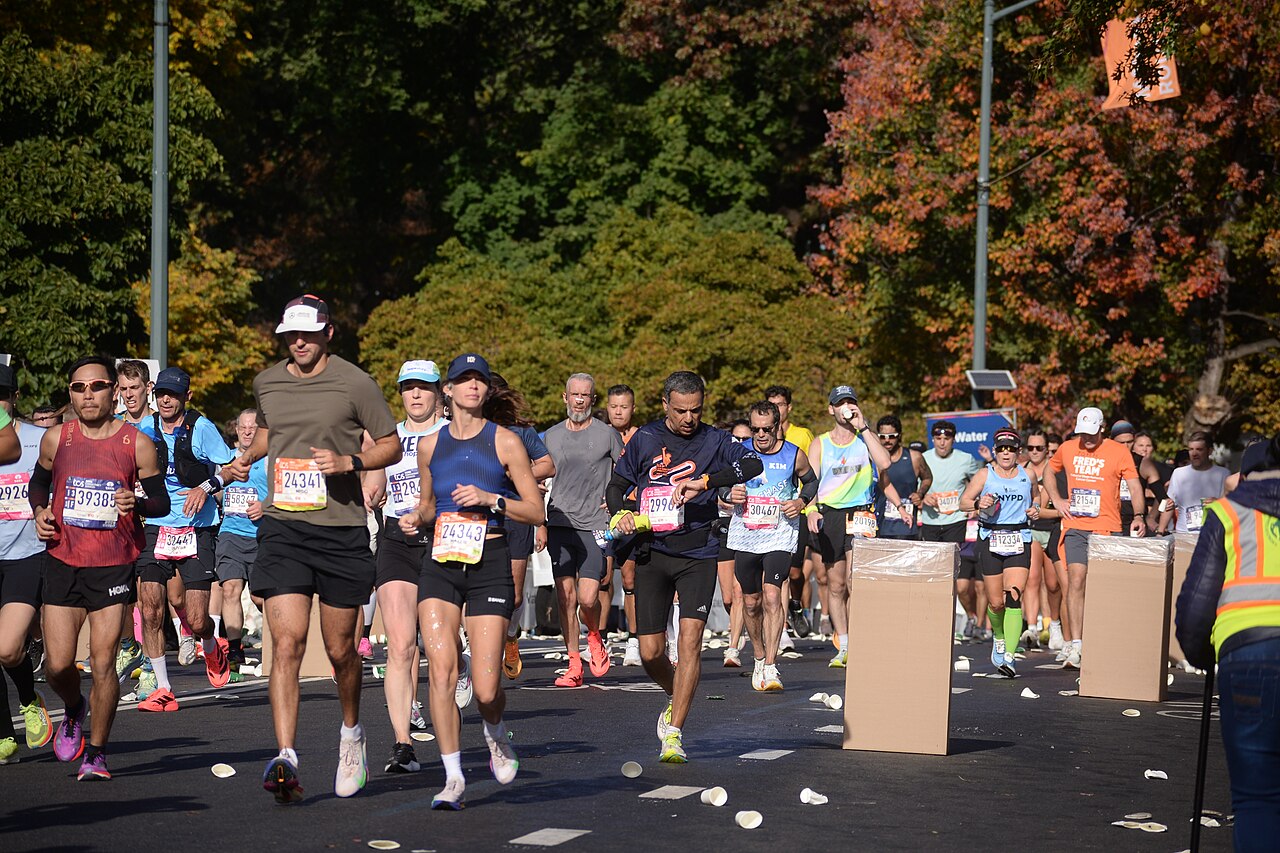
Water and Gatorade every mile from mile 3 to mile 25, except miles 5, 7 and 9, with tables on both sides of the road. Maurten gels were at miles 12 and 18, and bananas at mile 21. Toilets and medical aid were at every mile from mile 3.
When is the next New York City Marathon?
The 2027 TCS New York City Marathon is on Sunday 7 November 2027.
Where does the New York City Marathon start and finish?
It starts at Fort Wadsworth on Staten Island, at the foot of the Verrazzano-Narrows Bridge, and finishes in Central Park, on West Drive at 67th Street. It's point to point through all five boroughs: Staten Island, Brooklyn, Queens, the Bronx and Manhattan.
Is the New York City Marathon hilly?
Its streets are mostly gentle; its five bridges aren't. The course climbs onto the Verrazzano-Narrows Bridge from the start, then crosses the Pulaski, Queensboro, Willis Avenue and Madison Avenue bridges. Late on, miles 23 and 24 climb Fifth Avenue beside Central Park, and the park's roads roll to the finish.
Can spectators watch from the bridges?
No. There's no spectator viewing at the start or on the Verrazzano-Narrows Bridge, and spectators aren't allowed on any of the course's bridges. Most of the course is open to spectators from mile 3 to mile 26.
How do runners get to the start?
On the official transportation: the Staten Island Ferry from Whitehall Terminal with a bus from St. George, a bus from the New York Public Library in Midtown, or a bus from MetLife Stadium in New Jersey. Runners choose the mode, NYRR assigns the departure time, and they must take the one they were given.
Is there a bag drop at the start?
No. Only the clear start village bag from the Expo is allowed into Fort Wadsworth, and nothing is carried from the start to the finish. Runners can pre-check a bag, dropped off on Central Park West in the two days before the race, and clothes left at the start are donated.
How do you get into the New York City Marathon?
Through the non-guaranteed drawing, or a guaranteed entry: a charity place, an international tour operator's package, NYRR's 9+1 programme, a qualifying time, a 15th New York finish or a philanthropic membership. The dates and the rules are on NYRR's site.
When was the first New York City Marathon?
On 13 September 1970, as four-plus laps of Central Park: 127 runners registered and 55 finished. The race first went through all five boroughs on 24 October 1976, for the US Bicentennial, and 2026 was the 50th anniversary of that course.